How to Increase Milk Production in Buffaloes: 10 Proven Methods
How to Increase Milk Production in Buffaloes: 10 Proven Methods
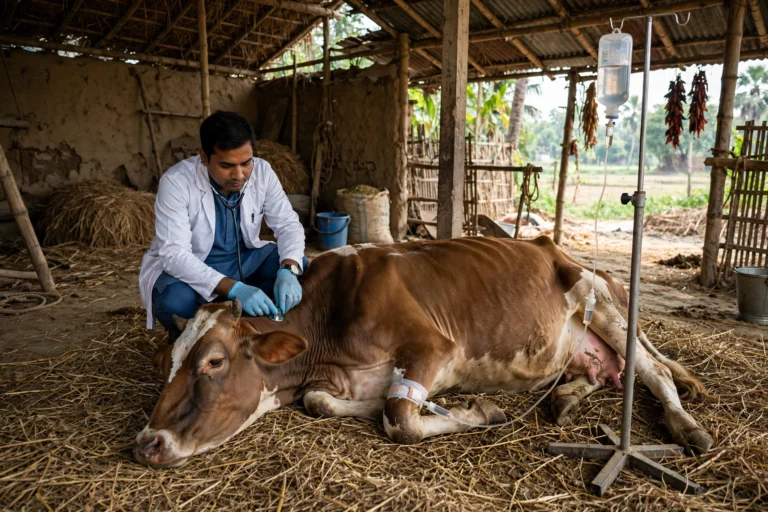
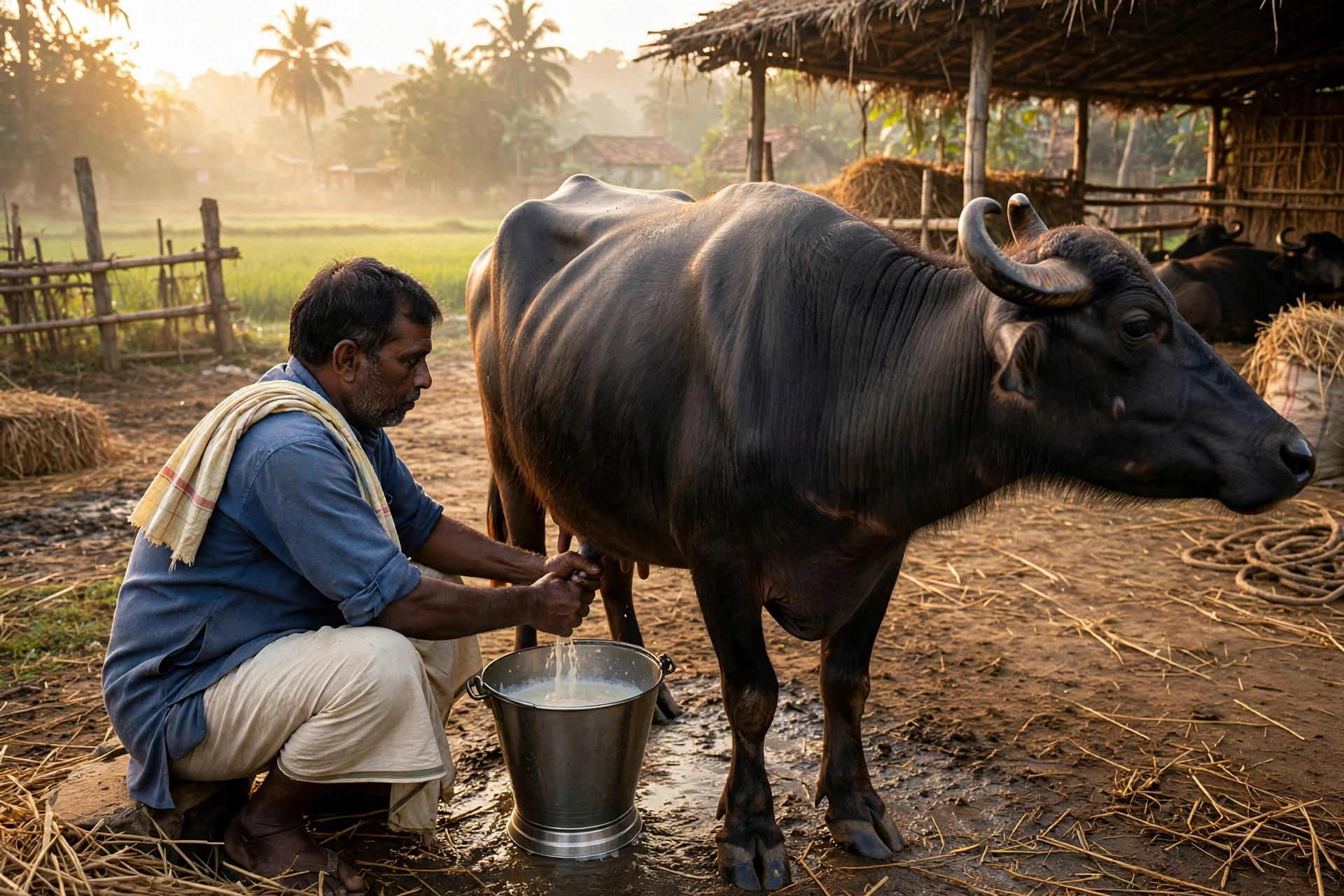
Every dairy farmer I have worked with asks me the same question: “Doctor sahab, meri bhains ka doodh kaise barhe?” It is the most common question in my practice, and honestly, the answer is rarely a magic injection or a secret powder. Milk production goes up when you fix the basics — the things that are easy to ignore and hard to do every single day.
I once visited a farmer near Lahore who was convinced his buffalo had a “doodh problem.” She was giving barely five litres. Two months later, after we fixed only her feeding and deworming, she was giving close to nine. No hormones. No shortcuts. Just basics done right.
Here are the ten methods I recommend most often. They work on Nili-Ravi, Murrah, Kundhi — any breed, any farm.
1. Feed a Balanced Ration, Not Just “More Feed”
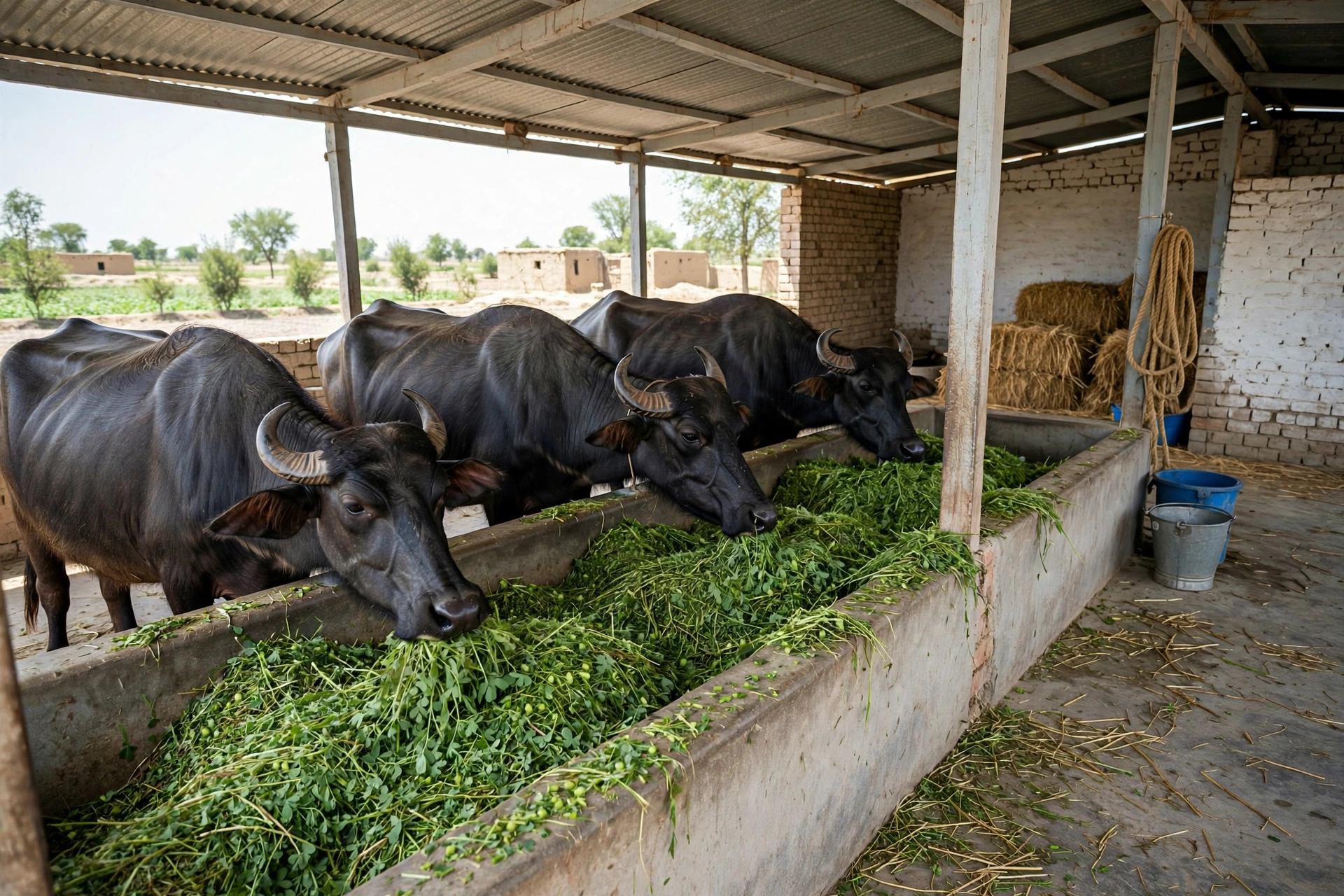
The biggest mistake I see is farmers increasing the quantity of feed instead of fixing its quality. A buffalo giving ten litres of milk needs protein, energy, calcium and phosphorus in the right ratio. Feeding her extra dry wheat straw will fill her stomach but starve her milk.
A simple rule: for every litre of milk, give roughly 400–500 grams of a good quality concentrate (vanda) along with plenty of green fodder. Green fodder — berseem, lucerne, maize fodder, sorghum — is the cheapest source of milk you will ever buy. Buffaloes on good green fodder give noticeably more milk than those on dry fodder alone. Keep dry fodder (toori) available, but never let it be the main feed.
2. Add a Mineral Mixture Every Day
This is the single most underused tool in buffalo farming. I cannot count how many “low milk” cases turned out to be simple mineral deficiency — especially calcium, phosphorus, zinc and copper.
Give 50–100 grams of a good mineral mixture daily, mixed into the concentrate. Not once a week when you remember — every day. Buffaloes on regular mineral supplementation show better milk yield, better fat percentage, and fewer repeat-breeding problems. Follow the dosage on the product label, and buy from a reputable brand.
3. Clean, Fresh Water at All Times
Milk is about 87% water. A buffalo giving ten litres of milk drinks 60–80 litres of water a day, more in summer. Yet I still see farms where water is given twice a day in a dirty trough.
Keep water available all day, and clean the trough regularly. In summer, slightly cool water encourages drinking. Dehydrated buffaloes drop milk within a day or two — sometimes the drop is dramatic, and farmers blame disease when the real culprit is the empty water trough.
4. Stick to a Strict Milking Routine
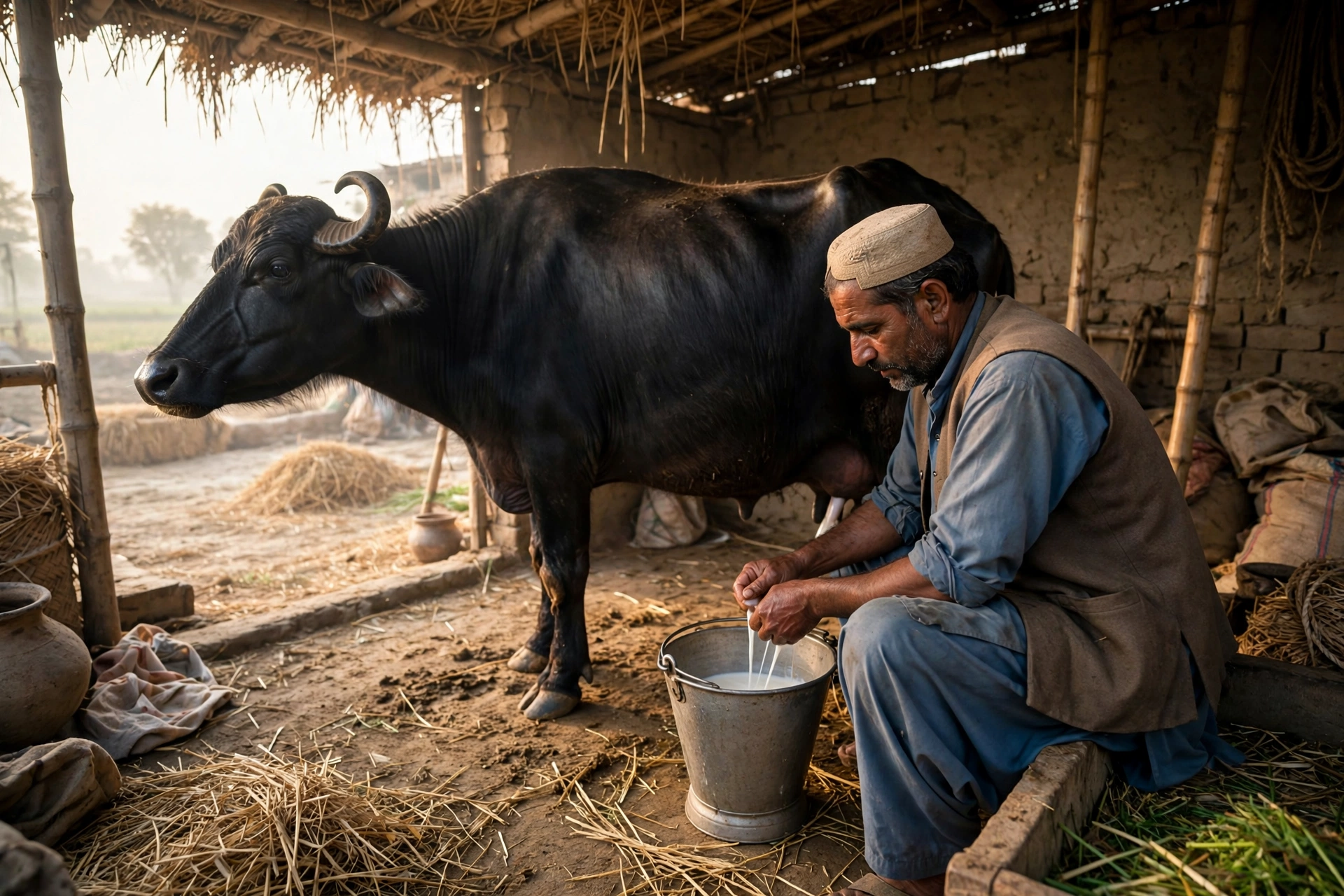
Buffaloes are creatures of habit. Milk at the same times every day — same hours, same order, same calm handling. Irregular milking times stress the animal and reduce letdown.
Also, milk her completely. Incomplete milking leaves milk in the udder, which signals the body to produce less next time. This is slow, invisible damage. Over a full lactation, sloppy milking can cost you hundreds of litres.
5. Udder Hygiene Before and After Milking
Wash the udder and teats with clean water before milking, and dip the teats in a mild antiseptic teat dip after milking. Mastitis — thanaila — is one of the top causes of permanently reduced milk, and it usually enters through the teat opening in the minutes after milking when the canal is still open.
Keep the milking area clean and dry. Dirty bedding is basically an invitation to mastitis. Prevention here is worth far more than treatment later.
6. Beat Heat Stress Before It Beats Your Milk
Buffaloes suffer heat stress badly — they have dark skin and fewer sweat glands than cows. When the temperature crosses 35°C, milk drops fast. The animal pants, eats less, and her milk just melts away.
Practical steps: provide shade or a shed with good airflow, offer water frequently, and hose her down or use a sprinkler 2–3 times during the hottest hours. Farmers who cool their buffaloes properly in summer often hold onto 1–2 extra litres per day compared to neighbours who do not. That adds up to a lot over a long summer.
7. Deworm on Schedule
Internal parasites steal nutrition silently. A buffalo with a worm burden can eat well and still give less milk, because the worms are eating first. Dull coat, poor condition despite good feeding, and slowly dropping milk are the classic signs.
Deworm every 3–4 months with a broad-spectrum dewormer (albendazole, fenbendazole or ivermectin-based products, as your vet recommends). Rotate the drug class occasionally. Always follow label dosage by body weight — underdosing breeds resistant worms.
8. Manage the Dry Period Properly
The dry period — the 60 days before calving when you stop milking — is when the udder rebuilds itself for the next lactation. Skipping it or cutting it short is one of the costliest mistakes a farmer can make.
Dry her off properly about two months before the expected calving date. During this time, do not overfeed concentrates (that invites milk fever later), but do give good fodder and minerals. A well-managed dry period routinely gives 15–20% more milk in the next lactation compared to a buffalo that was milked right up to calving.
9. Keep Records — Even Simple Ones
You cannot improve what you do not measure. The farmers with the highest milk yields are almost always the ones who keep records: daily milk per animal, calving dates, heat dates, treatments given.
A simple notebook works. Write down each animal’s daily milk once a week. Within two months you will know exactly which buffalo earns her feed and which one is eating into your profit. That knowledge changes every decision you make.
10. Cull the Chronic Low Yielders
This is the hardest advice to give, and the most profitable to follow. Some buffaloes, even with perfect care, simply have low genetic potential. Keeping a buffalo that gives four litres while eating the same as one that gives ten is a loss you pay every single day.
If an animal has had two full lactations of poor yield despite good management, consider selling her and replacing her with a better milker. Sentiment is understandable — but the farm has to survive.
What Moves the Needle Most?
If you asked me to pick the top three, I would say: balanced feeding with minerals, heat stress control, and proper dry period management. Those three alone can lift a buffalo’s lactation yield by 25–30% in many of the cases I see. The rest protect those gains.
Start with one change this week. Fix the water, or start the mineral mixture, or write down the milking times. Small, consistent improvements beat grand plans that last three days.
Frequently Asked Questions
How long does it take to see more milk after improving feed? Usually 2–3 weeks. The rumen needs time to adjust, and the body needs time to redirect nutrients to milk. Do not judge a feeding change in the first week.
Can injections increase milk permanently? No. Oxytocin forces milk letdown but damages the animal’s natural system over time and is illegal for routine use in many places. Hormonal tricks give a temporary bump and a long-term problem. Stick to management.
Does mineral mixture really make a difference? Yes — in my experience it is one of the highest-return investments on a dairy farm. But it must be daily, at the right dose, from a quality brand.
My buffalo gives less milk in summer. Is that normal? A small dip is normal, but a big drop usually means heat stress and low water intake. Cooling and water almost always recover most of the loss.
Improving buffalo milk production is not about one trick. It is about doing ten small things right, every day. Start today, keep records, and watch the numbers move.
Disclaimer: This article is for educational purposes only and is not a substitute for professional veterinary advice. Medicine dosages, feeding plans and treatments should always be confirmed with your local veterinarian, who knows your animals and your farm conditions.