Milk Fever in Dairy Cows: Causes, Treatment and Prevention
Milk Fever in Dairy Cows: Causes, Treatment and Prevention
Of all the calls I get in calving season, the milk fever call is the one where minutes matter. A cow that was perfectly fine in the morning is found lying down in the evening, unable to stand, her head turned to her side. I have lost count of how many such cases I have treated — and I can tell you this: milk fever is almost entirely preventable, yet it still kills cows every year because farmers do not see it coming.
Let me explain what it is, how to recognise it early, and how to stop it before it starts.
What Is Milk Fever?
Milk fever — also called parturient paresis or hypocalcemia — is not a fever at all. It is a sudden drop in blood calcium around calving. When a cow starts producing milk, her demand for calcium shoots up overnight. Colostrum and milk are rich in calcium, and a high-yielding cow can lose more calcium in a single milking than her entire blood supply contains.
Her body is supposed to respond by pulling calcium from bones and absorbing more from feed. But in some cows, this system is too slow. Blood calcium crashes, and because calcium controls muscle contraction, the muscles simply stop working. That is why she goes down.
Which Cows Are at Highest Risk?
Milk fever does not strike randomly. In my practice, the pattern is clear:
- Older, high-yielding cows (third lactation and above) are the most vulnerable. Their calcium regulation system is slower.
- Jersey and Guernsey breeds are genetically more prone than Holsteins or local breeds.
- Fat cows — overconditioned animals at calving have a much higher risk.
- Cows fed high-calcium diets during the dry period (lots of berseem or lucerne right before calving) are paradoxically at greater risk, because their calcium system goes “lazy” when dietary calcium is abundant.
- Cows with a previous history of milk fever are very likely to get it again.
If you have an older Jersey cow, slightly fat, due to calve this month — watch her like a hawk.
Stages and Symptoms: What to Look For
Milk fever progresses in three stages. Catching it in stage one makes treatment easy. Stage three is an emergency.
Stage 1 — Early signs (often missed): The cow seems restless or slightly off feed. She may be excitable, shift her weight, or show mild tremors in the muscles. Her ears may feel cold. Many farmers miss this stage completely.
Stage 2 — Sternal recumbency (lying down, unable to rise): This is the classic picture. The cow lies on her chest, unable to stand. Her head is often turned toward her flank. She looks dull, her muzzle is dry, her body temperature drops, and her heart sounds become weak. Constipation is common. She is still conscious but fading.
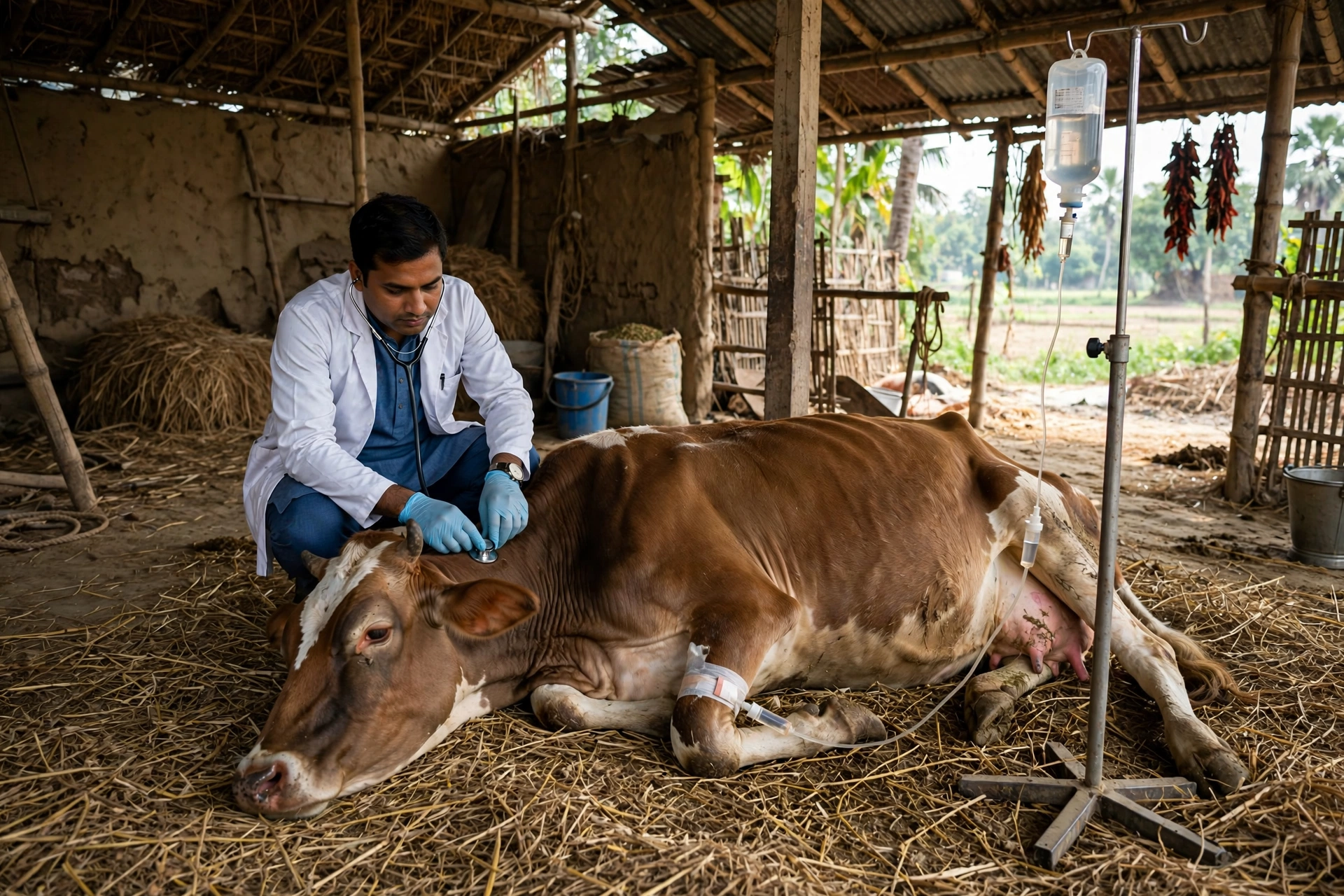
Stage 3 — Lateral recumbency (flat on her side): The cow lies flat, cannot lift her head, and is barely responsive. Bloating can develop quickly because the rumen stops moving. Without immediate treatment, she can die within hours.
Emergency Treatment: Call Your Vet Immediately
This is not a wait-and-watch situation. If a cow is down and you suspect milk fever, call your veterinarian right away.
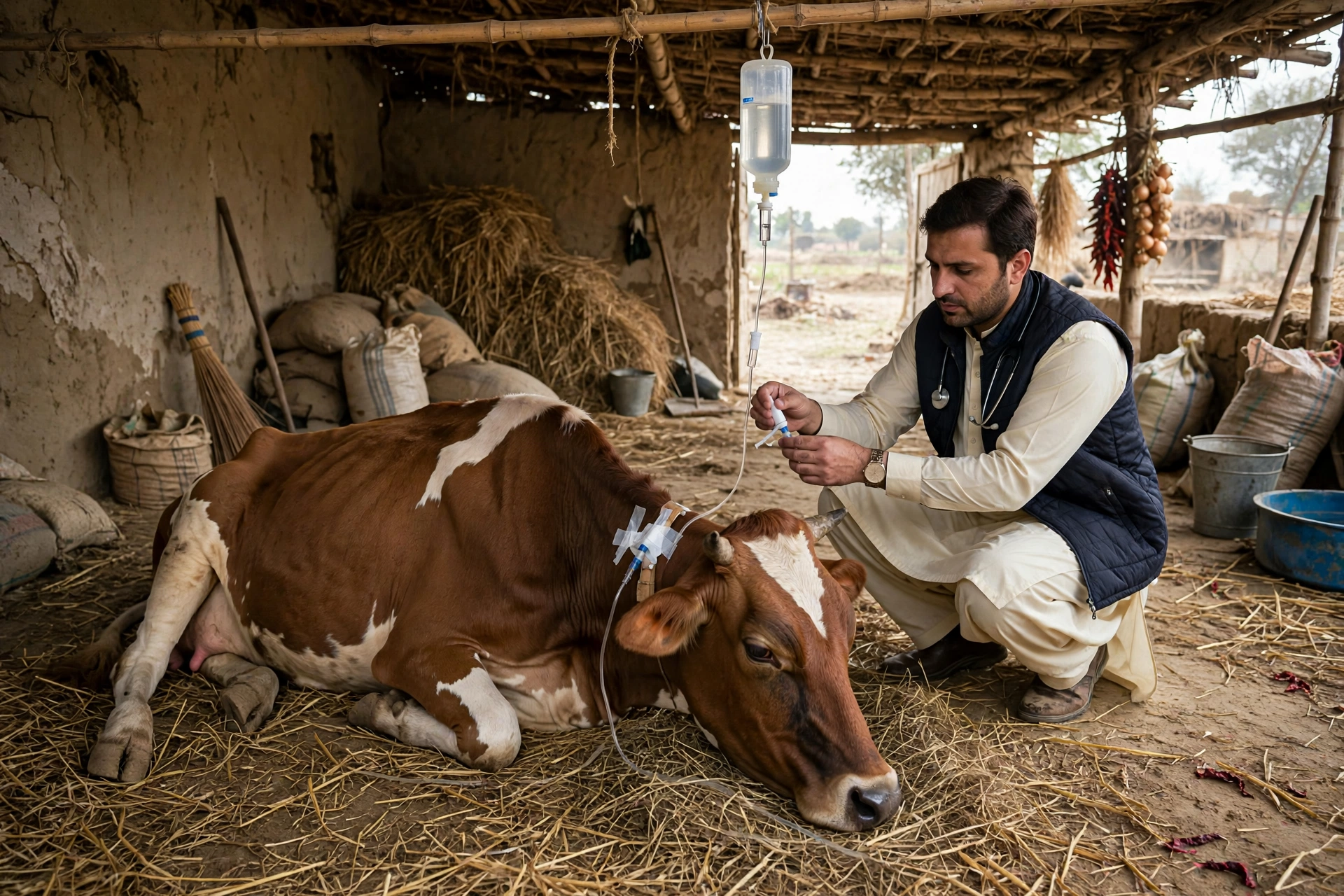
The standard treatment is intravenous calcium — calcium borogluconate given slowly into the vein. This must be done by a veterinarian or under veterinary supervision. Given too fast, IV calcium can stop the heart. I say this bluntly because I have seen farmers try to do it themselves after watching someone else do it once. Do not.
After IV calcium, the cow usually stands within 30 minutes to a few hours. Your vet may also give oral calcium gel as follow-up, and will check for complications like a retained placenta or a displaced abomasum, which sometimes follow milk fever.
One warning: about a quarter of treated cows relapse within 12–24 hours and need a second treatment. Keep a close eye on her for at least two days after she stands.
Prevention: Where the Real Victory Is
Treating milk fever is stressful and expensive. Preventing it is cheap. Here is what actually works:
1. Manage dry cow nutrition carefully. In the last 3–4 weeks before calving, avoid excess calcium. Cut back on calcium-rich green fodders like berseem and lucerne during this period, and avoid calcium supplements in the dry period. This “trains” her body to mobilise bone calcium efficiently.
2. Consider anionic salts. Anionic salt supplements (containing chloride and sulphur) given in the last 2–3 weeks of pregnancy acidify the blood slightly, which improves calcium mobilisation. They work well but must be dosed correctly — too much reduces feed intake. Use a commercial close-up dry cow mineral formulated for this purpose, and follow the label.
3. Give oral calcium at calving. An oral calcium bolus or gel given at calving and again 12 hours later is one of the simplest, most effective preventive steps for high-risk cows. Keep some on the farm during calving season.
4. Avoid overfeeding in the dry period. Fat cows get milk fever far more often. Keep dry cows in moderate body condition — not thin, not fat.
5. Reduce stress at calving. A calm, clean, dry calving area. Minimise moving the cow around in the last days. Stress hormones interfere with calcium regulation.
6. Milk with restraint in the first days. Do not milk a high-risk cow completely dry in the first 2–3 milkings after calving. Leaving some milk in the udder reduces the sudden calcium drain. (This advice applies to the first couple of days only.)
A Note on Buffaloes
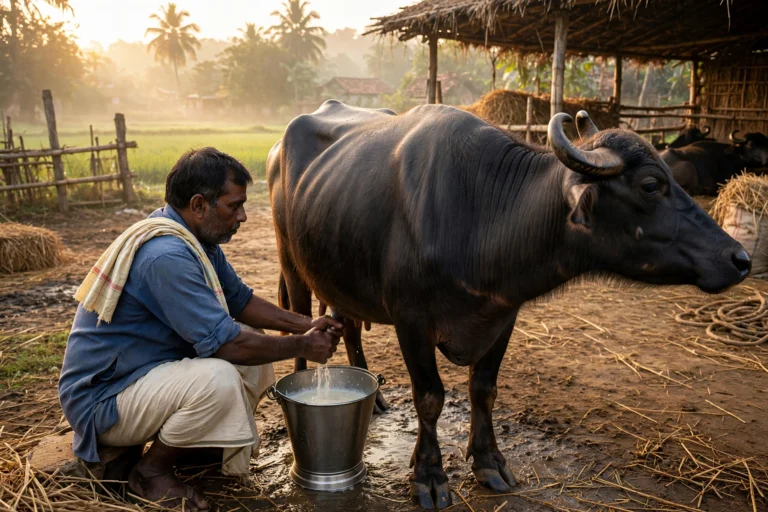
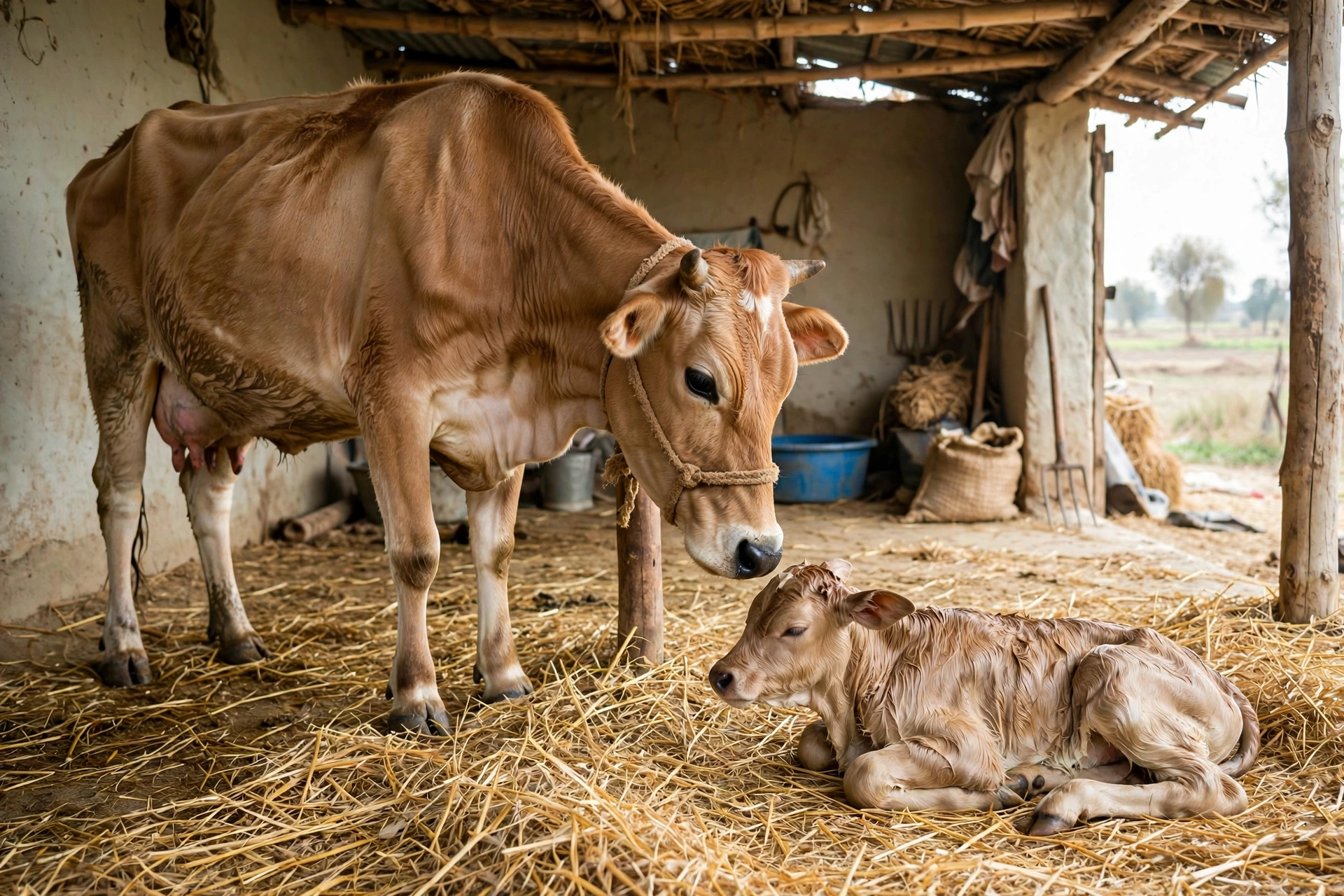
Buffaloes get milk fever too, though less often than high-yielding crossbred cows. The same prevention applies — and since buffalo milk is richer in calcium, the drain at calving can be significant. Do not assume your buffaloes are safe.
Frequently Asked Questions
Can milk fever kill a cow? Yes. Untreated stage-three milk fever is frequently fatal, sometimes within hours. Even treated cases can die if treatment comes too late or complications develop. Take every downer cow at calving seriously.
Is milk fever contagious? No. It is a metabolic disorder, not an infection. But the conditions that cause it — dry cow feeding mistakes — affect the whole herd, so if one cow gets it, check your dry cow management for all of them.
My cow recovered but is not eating well. Is that normal? Reduced appetite for a few days after milk fever is common. Make sure she has fresh water, good fodder, and no fever. If she is still off feed after 3–4 days, or develops a foul-smelling discharge, call your vet — secondary infections are possible.
Can I prevent it with just oral calcium, without changing feed? Oral calcium helps, but it works best alongside proper dry cow feeding. Feeding mistakes in the dry period are the root cause; oral calcium is the safety net, not the foundation.
Milk fever rewards the prepared farmer and punishes the careless one. Know your high-risk cows, fix the dry period feeding, keep oral calcium on hand — and you will see this emergency far less often.
Disclaimer: This article is for educational purposes only and is not a substitute for professional veterinary advice. Milk fever treatment involves intravenous calcium, which must be administered by a qualified veterinarian. Always consult your local vet for diagnosis, dosage and treatment decisions.