
Calf Diarrhea (Scours): Causes, Treatment and Prevention
Calf Diarrhea (Scours): Causes, Treatment and Prevention
Calf diarrhea — farmers call it scours, dast, or motion lagna — is the number one killer of young calves on dairy farms. Not pneumonia, not accidents. Diarrhea. And here is what makes it tragic: most of these deaths are preventable, and most are caused not by the infection itself but by dehydration that nobody corrected in time.
I tell every farmer the same thing: the germ gives the diarrhea, but dehydration does the killing. If you learn to fight dehydration, you will save calves that would otherwise die.
What Causes Scours?
Scours is a symptom, not a single disease. Several culprits cause it, and the calf’s age is your best clue:
In the first week of life — usually E. coli: E. coli strikes calves under 7 days old, sometimes within the first 48 hours. The diarrhea is watery, yellowish-white, and the calf goes downhill fast. This is the classic “did not get colostrum” disease — calves with failure of passive transfer are sitting ducks for it. Dirty calving areas and dirty feeding equipment are the usual source.
1–3 weeks — rotavirus and coronavirus: These viruses cause watery to pasty diarrhea in calves between one and three weeks old. The calf is dull, stops suckling, and dehydrates steadily. Antibiotics do nothing against viruses — a fact many farmers learn the expensive way.
2–4 weeks — Cryptosporidium (“crypto”): Crypto causes persistent, watery diarrhea that does not respond to antibiotics at all. It spreads through contaminated water and bedding, and — important — it can infect humans too. If your calves have crypto, handle them with gloves and wash your hands thoroughly.
Any age — management causes: Not all scours is infectious. Overfeeding milk, sudden changes in milk quantity or temperature, dirty water, and feeding spoiled milk replacer all cause nutritional diarrhea. I see this constantly: a farmer increases the milk “to make the calf grow faster,” and the calf’s gut rebels. More milk is not always better milk.
The Real Enemy: Dehydration
A scouring calf loses water and salts (electrolytes) in every bout of diarrhea. A calf can lose 5–10% of its body weight in fluids in a single day. At 10–12% dehydration, the calf goes into shock. Organs fail. Death follows.
This is why I keep repeating: treat the dehydration first, worry about the germ second. A calf with mild infection and corrected dehydration survives. A calf with mild infection and uncorrected dehydration dies.
How to Assess Dehydration: The Tests You Can Do
You do not need a lab. Your hands and eyes are enough:
The skin tent test: Pinch the skin on the calf’s neck or shoulder, pull it up, and release. In a healthy calf, it snaps back instantly. If it takes 2–4 seconds to flatten, the calf is about 6–8% dehydrated. If it stays tented for more than 4–5 seconds, dehydration is severe — 10% or more.
The eyes: Look at the calf’s eyes. Slightly sunken eyes mean moderate dehydration. Deeply sunken, dull eyes mean severe dehydration.
The gums and attitude: Dry, sticky gums and a calf that is too weak to stand or suckle are danger signs. A calf that still suckles eagerly is usually in the early, very treatable stage.
Cold extremities: Cold ears and cold legs in a scouring calf suggest poor circulation — this calf needs a vet urgently, possibly IV fluids.
Learn these tests. Practice them on healthy calves so you know what normal looks like. When scours hits at midnight, this knowledge is worth more than any medicine in your cupboard.
Treatment: The ORS Protocol That Saves Lives
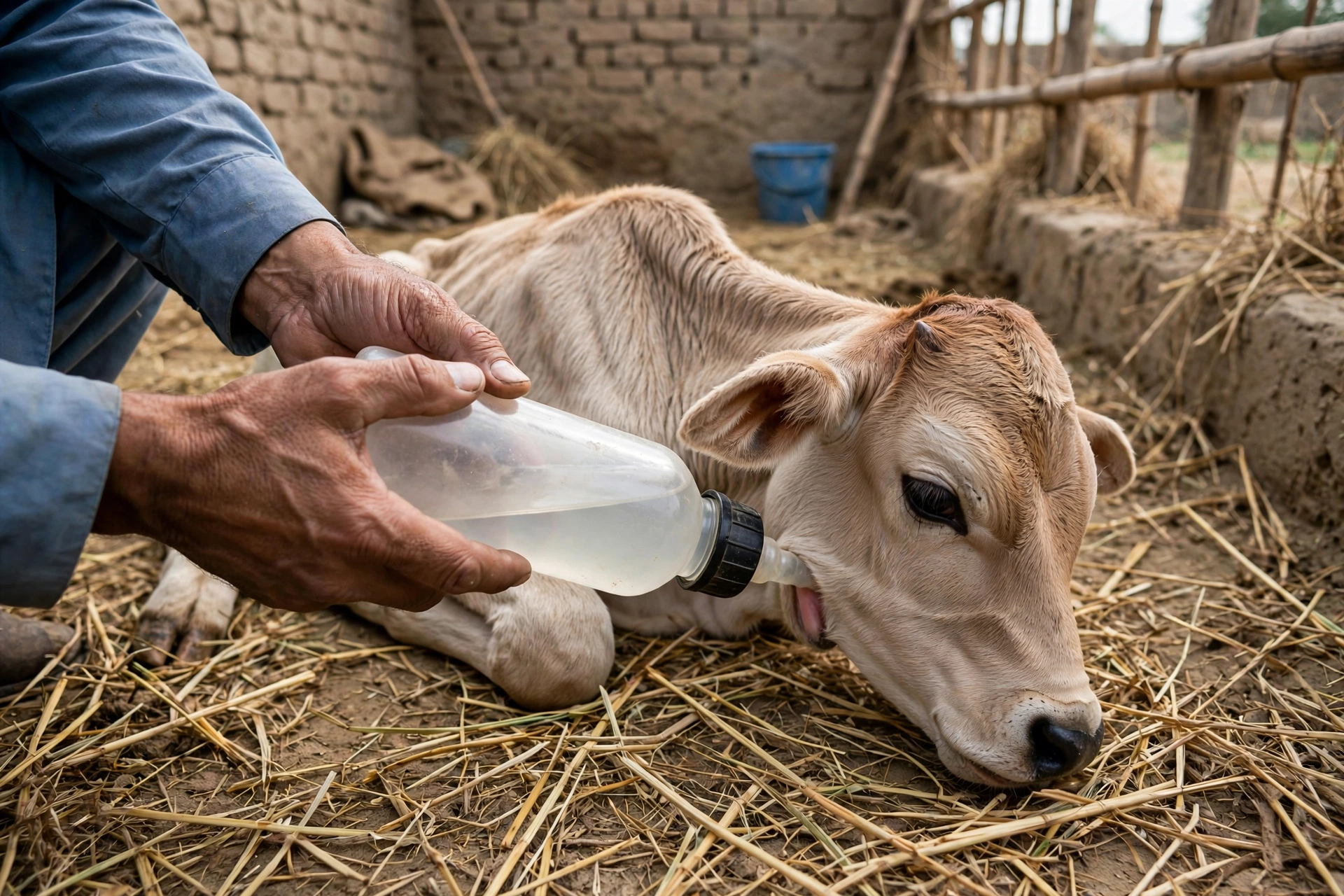
Step 1: Oral rehydration solution (ORS) — start immediately. This is the single most important treatment. Give an oral electrolyte solution made for calves (available at any veterinary store) — 2 litres, 2–3 times a day, in addition to milk. Yes, in addition to milk: the old advice to “stop milk during diarrhea” is outdated and harmful. Milk gives energy; ORS replaces water and salts. A scouring calf needs both.
If you cannot get commercial calf ORS immediately, a homemade emergency mix works: 1 litre of clean warm water + 6 teaspoons of sugar + half a teaspoon of salt + half a teaspoon of baking soda (sodium bicarbonate). Use this only until you can get proper calf electrolytes.
Feed ORS with a bottle or bucket, 2–3 hours apart from milk feeding so they do not interfere with each other.
Step 2: Keep feeding milk. Continue the calf’s normal milk allowance. Withholding milk starves an already weakened calf and slows gut healing. The only exception: if your vet specifically advises a short pause, follow their advice.
Step 3: When are antibiotics needed? Here is the honest answer most farmers do not want to hear: most scours does not need antibiotics. Viruses, crypto and nutritional scours do not respond to them at all. Antibiotics are justified only when there are signs of bacterial infection spreading beyond the gut — fever, blood in the stool, a very young calf with E. coli, or a calf that is clearly getting worse despite fluids.
Unnecessary antibiotics waste money, disturb the gut further, and build resistance. Let your vet decide. Your job is fluids, fluids, fluids.
Step 4: Know when to call the vet. Call immediately if: the calf cannot stand, refuses all fluids, has blood in the stool, is bloated, has a swollen painful navel alongside the diarrhea, or is not improving after 24 hours of ORS. Calves under a week old with watery diarrhea need veterinary attention fast — E. coli kills quickly.
Step 5: IV fluids for severe cases. A calf that will not drink and is severely dehydrated needs intravenous fluids. This is a vet-only job. Do not wait until the calf is nearly dead before calling — IV fluids work best when given early in severe dehydration.
Prevention: Stop Scours Before It Starts
Treatment saves calves; prevention saves money, time and heartbreak.
1. Colostrum, colostrum, colostrum. Adequate colostrum in the first 6 hours is the strongest protection against scours. Most E. coli scours I see trace back to colostrum failure.
2. Hygiene at calving. Calve in a clean, dry area — not the same dirty corner where sick animals stood. Disinfect the navel with tincture of iodine right after birth. Most infections enter through the navel or the mouth in the first hours.
3. Clean feeding equipment. Wash bottles, nipples and buckets with hot water and disinfectant after every single use. This one habit prevents more scours than any vaccine.
4. Do not overfeed. Follow a consistent milk quantity and schedule. Sudden increases cause nutritional diarrhea. Warm the milk to body temperature every time.
5. Isolate sick calves. A scouring calf sheds millions of germs. Move it away from healthy calves immediately, and handle sick calves last — then wash your hands and boots before touching the healthy ones.
6. Vaccinate the dam. Vaccinating pregnant cows against E. coli, rotavirus and coronavirus in late pregnancy boosts the antibodies in her colostrum. Ask your vet about a scour-prevention vaccination schedule — it is one of the best investments in calf health.
7. Clean water. Calves need clean drinking water from the first week, alongside milk. Dirty water troughs are a crypto highway.

Frequently Asked Questions
Should I stop milk when the calf has diarrhea? No — this is outdated advice. Continue milk feeding and add ORS between milk feeds. Withholding milk weakens the calf and delays recovery.
My calf’s diarrhea is white and watery. What is it? In a calf under a week old, that is most likely E. coli — treat as an emergency with ORS and call your vet. In older calves it may be viral. Age plus symptoms guide the diagnosis, but your vet can confirm.
How long does scours usually last? Uncomplicated cases resolve in 3–5 days with proper fluid therapy. If it drags beyond a week, or the calf keeps relapsing, suspect crypto or a management problem (dirty equipment, overfeeding) and investigate.
Can I use human ORS packets for calves? In a true emergency, human ORS is better than plain water, but calf-specific electrolytes are formulated for a calf’s needs (including energy sources and alkalinising agents). Get the proper calf product as soon as possible.
Scours will visit every dairy farm sooner or later. The farms that lose calves to it are the ones that reach for antibiotics first and fluids second. Flip that order — fluids first, always — and you will wonder why scours ever scared you.
Disclaimer: This article is for educational purposes only and is not a substitute for professional veterinary advice. Drug choices and dosages must be confirmed with your local veterinarian, and severely dehydrated calves need prompt veterinary care including intravenous fluids.