Deworming in Cows and Buffaloes: Schedule, Medicines and Best Practices
Worms are the quietest thieves on a dairy farm. They do not cause dramatic outbreaks like gal ghotu. They do not make the evening news like foot-and-mouth disease. They just sit inside your animal, day after day, drinking its blood, stealing its feed, and shaving litres off your milk — while the animal looks “more or less fine.”
I have lost count of the “low milk yield” cases that turned out to be worms. The farmer feeds well, the animal looks healthy enough, but production never matches the feed bill. We deworm, and three weeks later the same farmer is smiling at the milk can. It happens that often.
Why Deworming Matters More Than You Think
Internal parasites — roundworms, tapeworms, flukes, and others — damage dairy animals in ways that add up fast:
- Stolen nutrition. Worms feed on blood and gut contents. A heavily parasitised animal can lose a significant share of its daily feed to worms before a single nutrient reaches its udder.
- Reduced milk yield. Studies and field experience both agree: dewormed animals consistently milk better than parasitised ones on the same feed.
- Poor growth in young stock. Calves with worms grow slowly, mature late, and calve late — every extra month before first calving is money lost.
- Weakened immunity. Parasitised animals respond poorly to vaccines and fall sick more easily. Your vaccination program is only as strong as your deworming program.
- Bottle jaw and anaemia. In severe cases, you will see swelling under the jaw (bottle jaw), pale gums and eyes, and an animal that fades no matter how much you feed it.
The cruel part? By the time you see bottle jaw, the worm burden is already enormous. The goal is to deworm before it gets that bad.
Signs Your Animal May Have Worms
No single sign proves worms — that is what faecal testing is for — but this cluster should make you suspicious:
- Gradual weight loss or poor growth despite good feeding
- Rough, dull hair coat — the animal loses its shine
- Reduced milk yield that does not match the feed
- Pale gums and inner eyelids (anaemia) — compare with a healthy animal
- Bottle jaw — soft swelling under the jaw, classic in severe cases
- Diarrhoea or intermittent loose dung, sometimes with visible worms or segments
- Pot belly in calves with thin bodies — the classic wormy calf look
- Eating soil or licking walls (pica) in some chronic cases
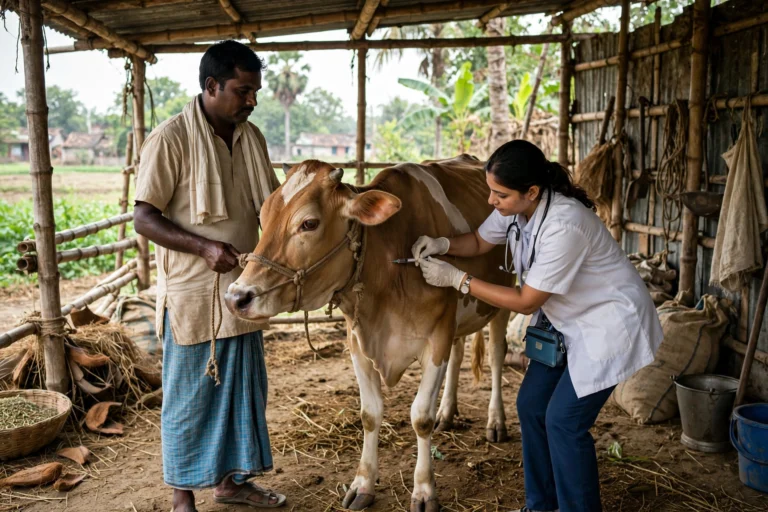
If you see several of these together, do not just deworm blindly — call your vet. A simple dung test (faecal egg count) tells you exactly which worms you are fighting and whether your dewormer is working. It costs little and removes all the guesswork.
The Deworming Calendar: Calves vs Adults
Worm pressure is not the same all year, and calves are not small adults. Here is the schedule I recommend:
Calves (birth to 12 months)
Calves are born worm-free but pick up parasites within weeks — from their mother’s milk, from contaminated bedding, from pasture. They are the most vulnerable group.
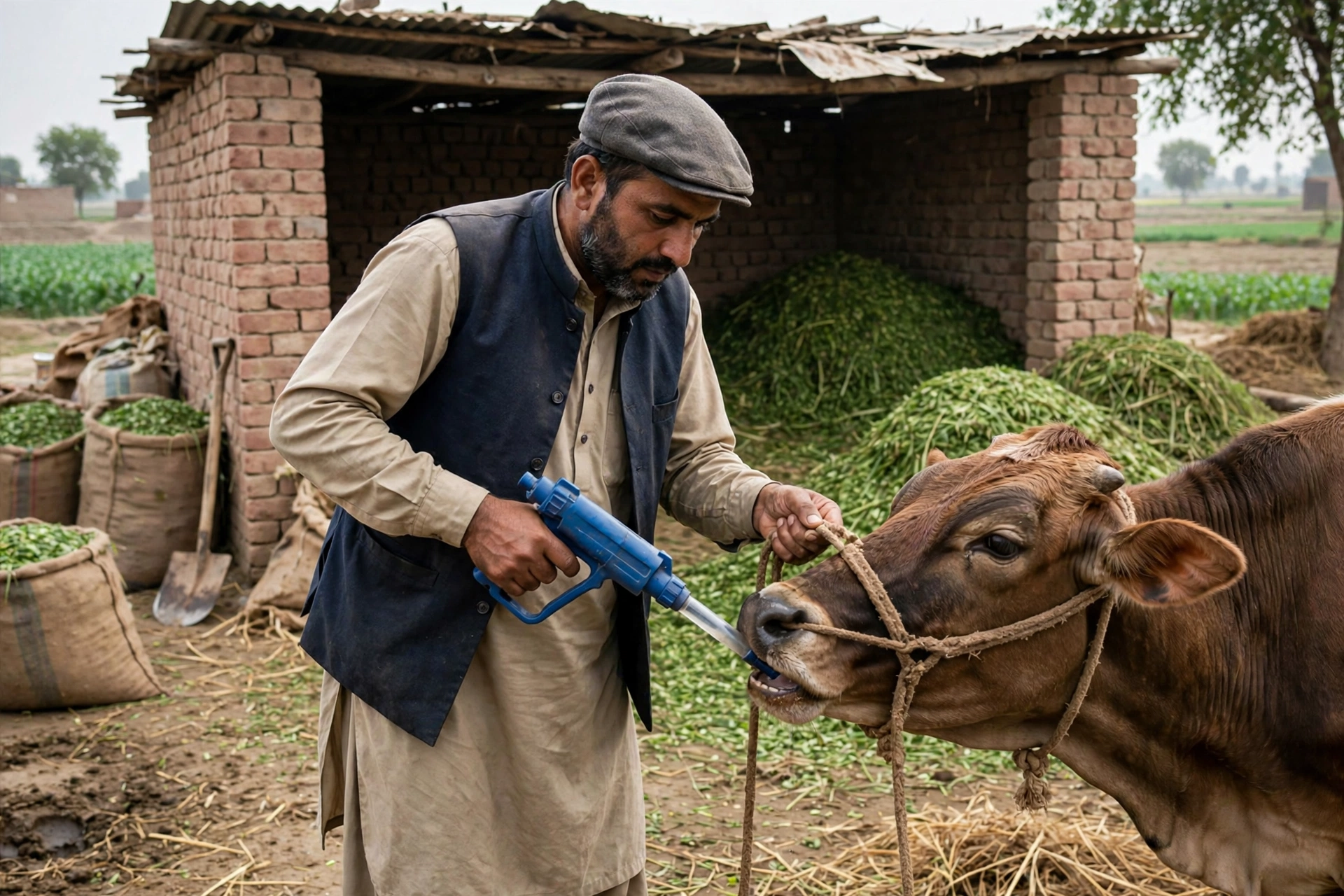
- First deworming: at 1 month of age
- Then: every month until 6 months of age (yes, monthly — calf worm burdens build terrifyingly fast)
- 6 to 12 months: every 2–3 months
I know monthly deworming sounds like a lot. But a calf’s first six months decide its lifetime productivity. Stunting a calf with worms in month three is damage you never fully undo.
Adult cattle and buffaloes
- Every 3–4 months (3 times a year minimum)
- Always deworm before the monsoon (May–June) — warm, wet conditions explode worm populations on pasture
- Always deworm after the monsoon (September–October) — animals picked up heavy burdens during the rains
- Deworm 2–3 weeks before calving — a clean dam gives her calf a cleaner start, and she needs every nutrient for milk
Strategic timing that multiplies the benefit
- Deworm before the breeding season — parasites reduce fertility in both males and females
- Deworm newly purchased animals during quarantine, before they join the herd
- If your animals graze, time one deworming 3–4 weeks after moving to fresh pasture
Common Deworming Medicines (and How to Use Them Right)
These are the anthelmintics most vets in our region use. I am naming generics, not brands, because the molecule is what matters:
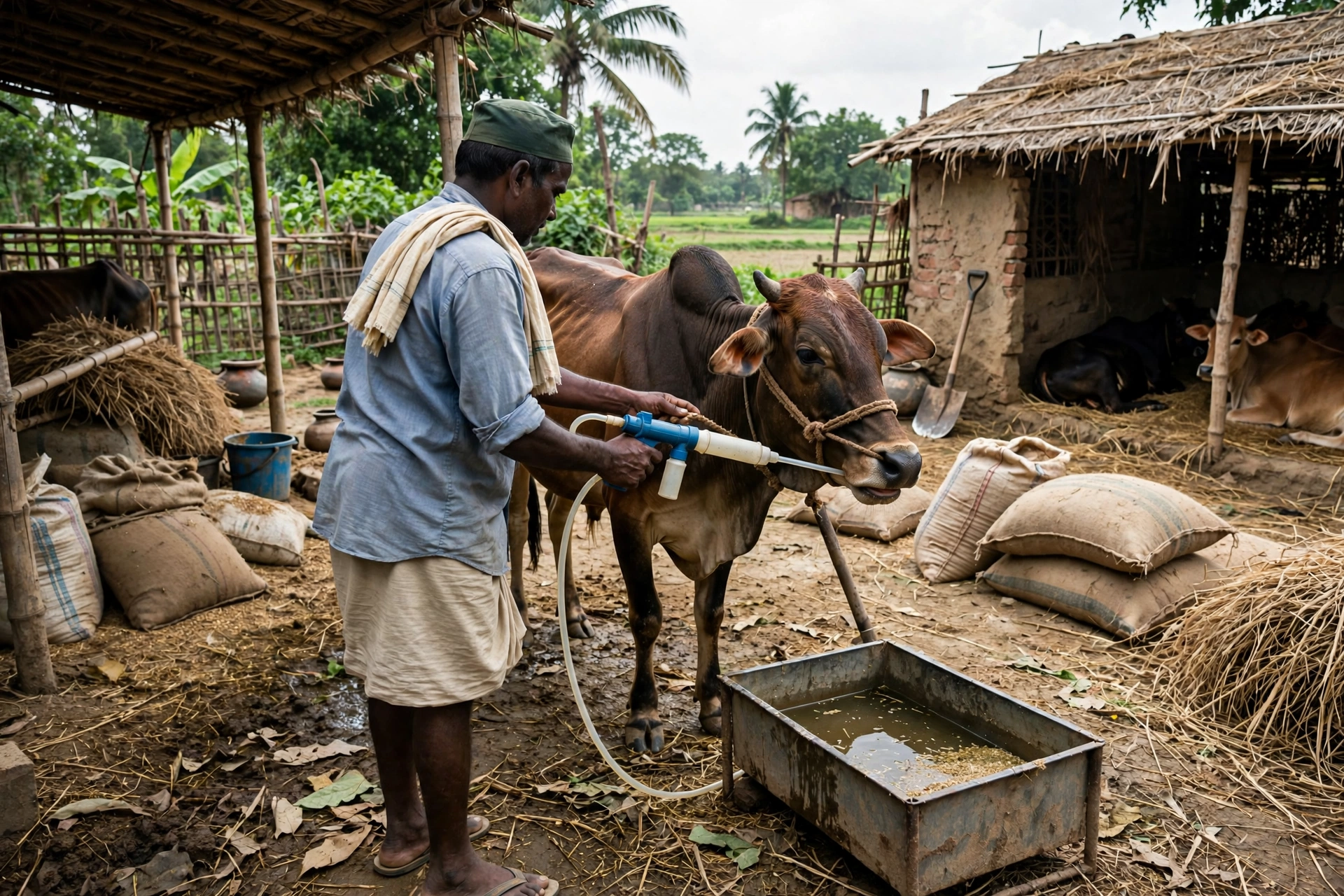
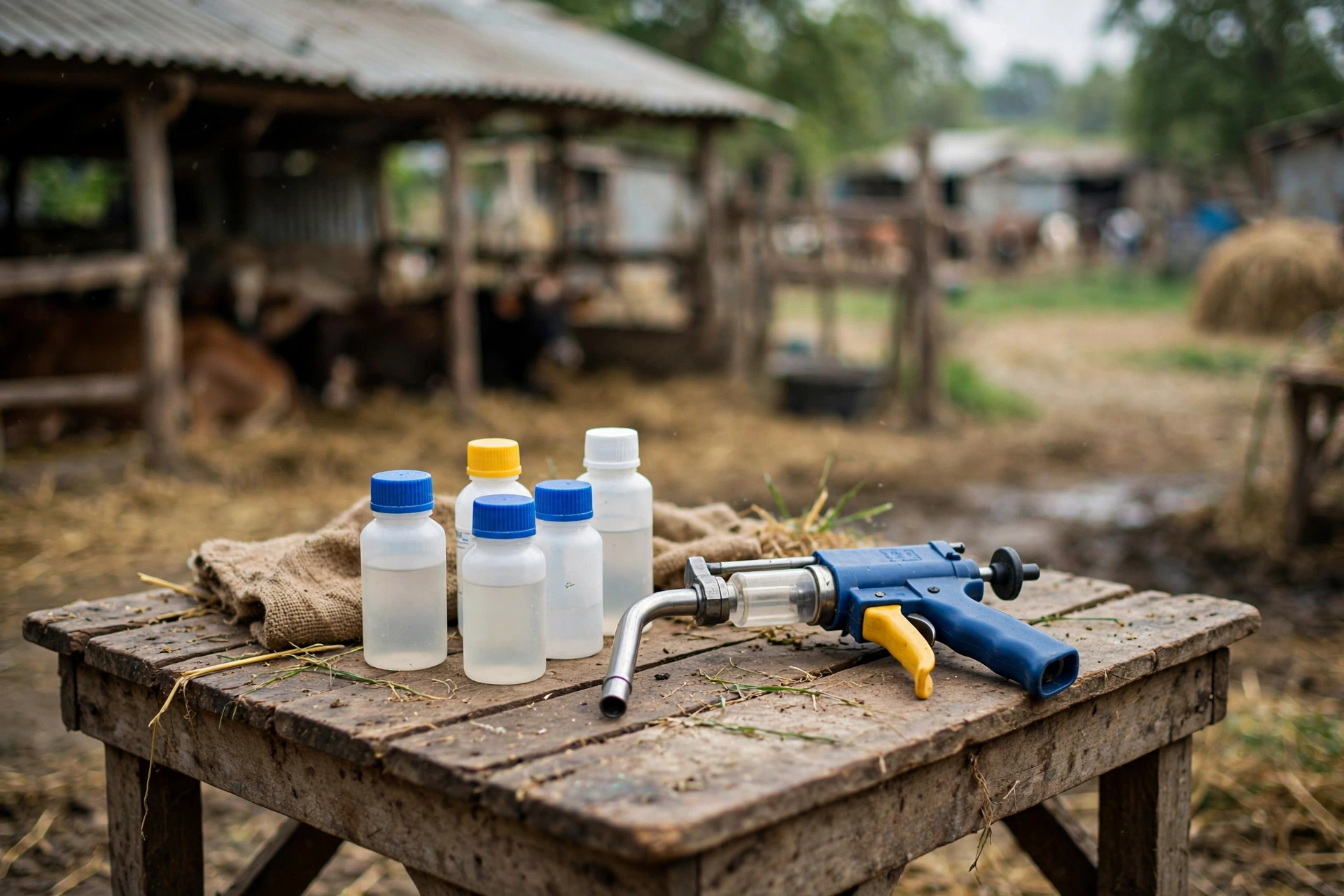
- Albendazole — broad-spectrum, effective against roundworms, tapeworms, and flukes. The workhorse of field deworming. Usually given orally as a drench or bolus.
- Fenbendazole — excellent against roundworms, also useful in young calves. Often chosen when albendazole has been used repeatedly.
- Ivermectin — injectable or oral; covers roundworms plus external parasites (mites, lice, ticks). Very handy when an animal has both internal and external parasites.
- Levamisole — effective against roundworms; sometimes combined with other drugs in broad-spectrum products.
- Triclabendazole — the specialist against liver fluke, for areas where fluke is a known problem (wet, marshy grazing areas).
- Praziquantel — the tapeworm specialist, often in combination products.
The golden rule: ROTATE
This is the single most important piece of advice in this article. Do not use the same dewormer every time. Worms develop resistance to drugs they meet repeatedly — this is already a documented problem with albendazole in some areas.
A simple rotation that works:
- First round: albendazole
- Next round (3–4 months later): ivermectin or fenbendazole
- Next round: levamisole-based product
- Repeat the cycle
Rotate the drug class, not just the brand name. Two different brands containing albendazole are the same drug as far as the worms are concerned — check the generic name on the pack, not the label design.
Dosage: the part farmers get wrong most
- Weigh the animal, or estimate honestly. Under-dosing is the number one cause of deworming failure — and it actively breeds drug-resistant worms. A “rough guess” that underestimates weight by 20% means 20% of worms survive, and the survivors are the resistant ones.
- Follow the label dose exactly. More is not better — overdosing wastes money and can poison the animal, especially with levamisole and ivermectin.
- Check the expiry date. Expired dewormers lose potency.
- Pregnant animals: most modern dewormers are considered safe in pregnancy, but confirm with your vet and avoid deworming in the very last days before calving unless advised.
Mistakes That Make Deworming Useless
I see these on farms constantly:
- Deworming once a year and calling it done. One annual dose barely dents a worm population. Parasites reproduce in weeks, not years.
- Using the same product for five years straight. Congratulations, you have now bred albendazole-resistant worms on your farm. Rotate.
- Deworming on a dirty farm. You kill the worms inside the animal, then it walks back onto dung-covered ground and reinfects itself within days. Clean bedding, proper dung disposal, and rotational grazing are half the battle.
- Deworming only the thin animals. The fat-looking ones carry worms too — they are just coping better. Deworm the herd, not the individual.
- Ignoring external parasites. Ticks and lice stress animals and spread blood parasites (like theileria and babesia). An animal with ticks needs those handled alongside worms — ivermectin covers both, which is why vets reach for it.
- Deworming and vaccinating on the same day. Space them a week apart so the immune system handles one job at a time.
Pasture and Hygiene: Deworming Without Medicine
Drugs are only half the program. Worm eggs live in dung, soil, and on pasture — break that cycle and you need less medicine:
- Remove dung from sheds daily. This alone cuts reinfection dramatically.
- Keep feed and water troughs clean and raised off the ground — animals should not be eating where they defecate.
- Rotate grazing areas if you have the land. Resting a pasture for a few weeks in hot sun kills many larvae.
- Avoid grazing marshy, waterlogged areas — that is liver fluke territory.
- Quarantine and deworm new animals before they contaminate your pastures.
A farmer once told me his dewormer “stopped working.” We visited his farm: calves standing knee-deep in their own dung, water trough green with filth. The drug was fine. The management was the problem. Clean farm, working drug — they go together.
Frequently Asked Questions
How do I know if the dewormer actually worked? The practical test: a faecal egg count before deworming and another 10–14 days after. A big drop means it worked. If egg counts stay high, you may have resistance — tell your vet, do not just double the dose.
Can I give dewormer in feed instead of drenching? Some products are designed for feed mixing, but drenching or bolus dosing guarantees each animal gets its full dose. In-feed dosing means the bossy animals eat extra and the shy ones get too little. For valuable dairy animals, individual dosing is worth the effort.
My buffalo milks less right after deworming. Is that normal? A slight, temporary dip for a day or two can happen as the body clears dead parasites. But a major or prolonged drop is not normal — call your vet. Also note the milk withdrawal period on the product label: most dewormers require you to discard milk for a few days after dosing.
Do I need to deworm if my animals never graze and stay in the shed? Yes — though less intensively. Stall-fed animals still pick up worms from contaminated fodder, bedding, and water. Twice a year is the minimum even for zero-grazing units.
The Bottom Line
Deworming is not glamorous. There is no dramatic rescue story, no photo-worthy moment. It is quiet, routine, unexciting work — and it is one of the highest-return routines on a dairy farm. The milk you gain, the calves that grow on time, the vaccines that actually take hold: much of it traces back to this simple habit.
Three times a year for adults. Monthly for young calves. Rotate your drugs. Weigh before you dose. Keep the shed clean. That is the whole program — and the farmers who follow it wonder why everyone else complains about “low milk.”
Disclaimer: This article is for educational purposes only and is not a substitute for professional veterinary advice. Always follow label dosages and consult your local veterinarian before medicating your animals.