Dairy Cattle Feed Formula: How to Make a Balanced Vanda at Home
I still remember a buffalo I was called to see in a village near Gujranwala. She was giving barely four litres a day, her ribs were visible, and the farmer told me, quite proudly, that he was feeding her “market wala vanda” — a branded concentrate, three kilos a day. The feed was fine. The problem was everything else: he had no idea what was inside that bag, no green fodder that month, and no mineral mixture. The animal was eating calories but starving for nutrients.
That visit taught me something I keep repeating to farmers: a vanda is not a magic powder. It is a balanced mix of energy, protein, minerals, and vitamins — and once you understand the formula, you can mix a perfectly good one at home, cheaper and often fresher than the bagged stuff.
Why Your Animal Needs Concentrate, Not Just Fodder
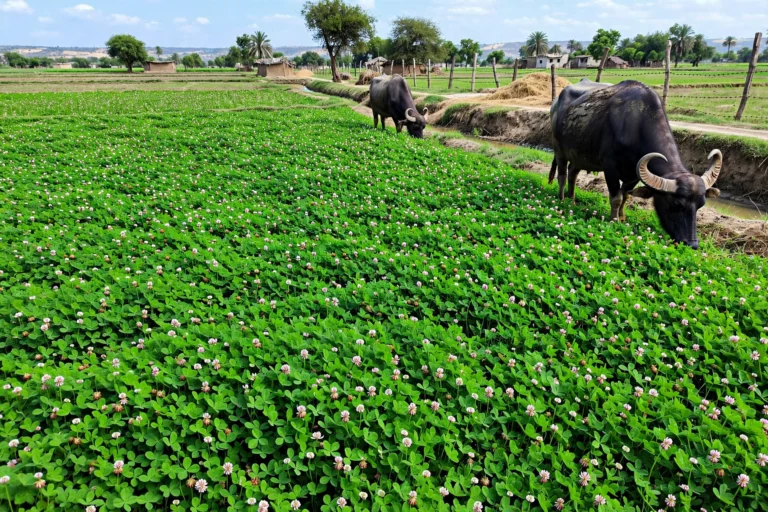
Green fodder is the cheapest feed on your farm, and I will never tell you to reduce it. But here is the honest math: a buffalo giving 10 litres of milk needs roughly 13–14 kg of dry matter a day. Even the best berseem gives you about 4–5 kg of dry matter per 20 kg of fresh fodder. To meet her energy and protein needs from green fodder alone, she would need to eat 50–60 kg of it daily. Her stomach simply cannot.
This is where concentrate comes in. The rule of thumb I give every farmer is simple: for every 2.5 litres of milk, feed about 1 kg of concentrate. A cow giving 10 litres gets around 4 kg of vanda per day, plus 1.5–2 kg for body maintenance. But the formula — what goes into that kilo — matters far more than the quantity.
The Ingredients, One by One
You do not need exotic ingredients. Every grain market in Punjab and Sindh carries these:
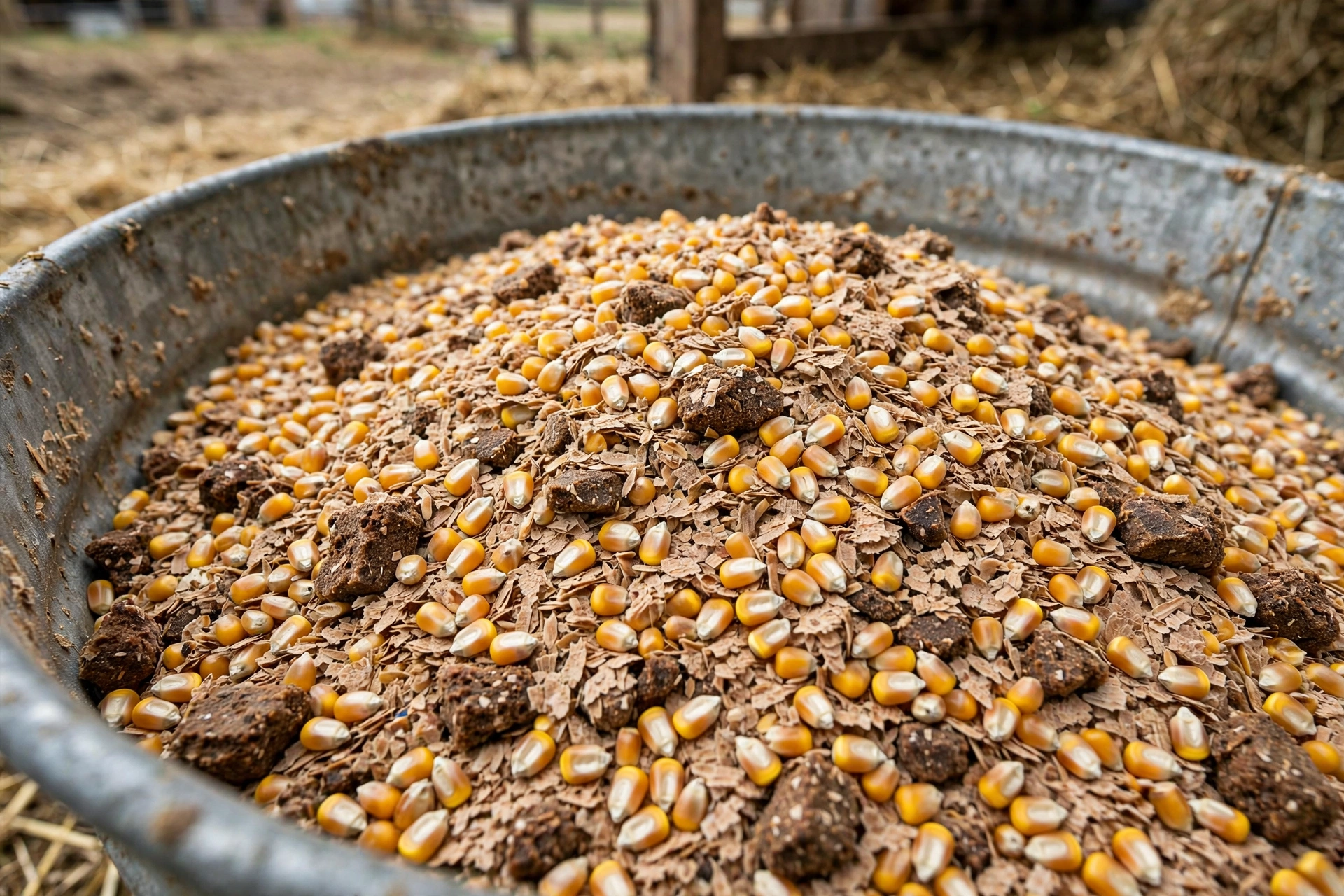
Maize (makai) — the energy king. It is the most digestible grain for cattle and forms the backbone of any good vanda. Cracked or coarsely ground, never fine powder.
Wheat bran (choker) — a by-product, cheap and rich in phosphorus. It adds bulk and palatability. Fresh bran is best; old, musty bran can carry aflatoxins.
Cottonseed cake (khal banola) — the main protein source. Undecorticated cake gives about 22–24% protein. Buy from a trusted crusher; adulterated cake is a common scam.
Mustard cake (sarson ki khal) — another excellent protein source, slightly bitter, so animals take a few days to accept it. Mix gradually.
Rice polish — cheap energy and a good source of B-vitamins. Very palatable. Do not confuse it with rice husk, which is almost pure fibre and nearly useless.
Mineral mixture — this is the ingredient farmers skip, and then they wonder why milk yield stagnates and animals do not come into heat. A good mineral mixture provides calcium, phosphorus, zinc, copper, and iodine. Use a reputable brand at the recommended rate.
Common salt (namak) — yes, ordinary salt. One to two percent of the mix. Animals on stall feeding almost always run short of sodium.
Sample Home Vanda Formulas
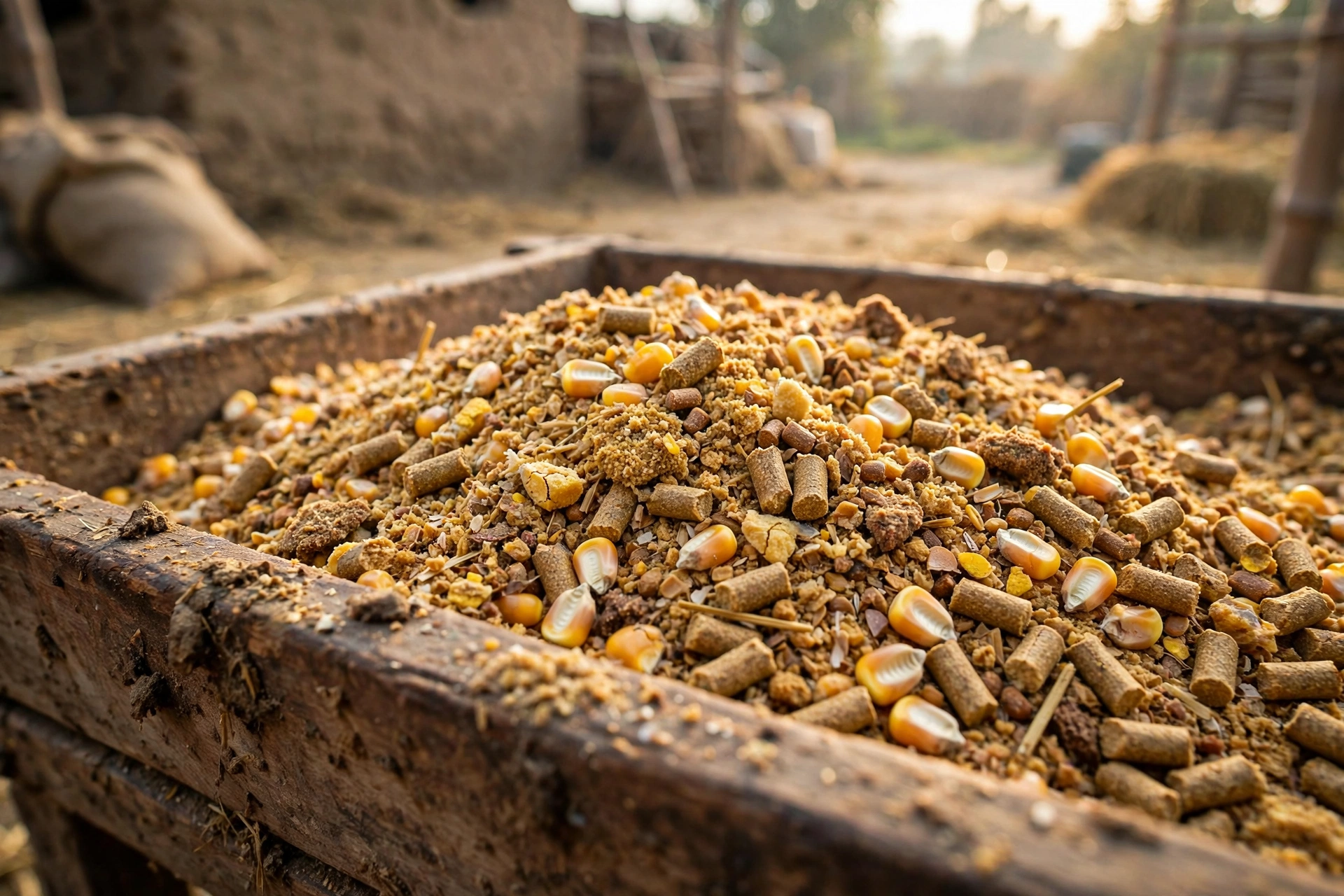
Here are three formulas I have used and refined over the years. All are for 100 kg of finished mix. The numbers shift with milk yield because a high yielder needs more protein.
Formula A — For animals giving up to 10 litres/day (~16% protein)
| Ingredient | Quantity |
|---|---|
| Crushed maize | 32 kg |
| Wheat bran | 25 kg |
| Cottonseed cake | 15 kg |
| Mustard cake | 10 kg |
| Rice polish | 15 kg |
| Mineral mixture | 2 kg |
| Common salt | 1 kg |
Formula B — For animals giving 10–15 litres/day (~18% protein)
| Ingredient | Quantity |
|---|---|
| Crushed maize | 30 kg |
| Wheat bran | 22 kg |
| Cottonseed cake | 20 kg |
| Mustard cake | 12 kg |
| Rice polish | 13 kg |
| Mineral mixture | 2 kg |
| Common salt | 1 kg |
Formula C — For high yielders, 15–20 litres/day (~20% protein)
| Ingredient | Quantity |
|---|---|
| Crushed maize | 28 kg |
| Wheat bran | 20 kg |
| Cottonseed cake | 25 kg |
| Mustard cake | 12 kg |
| Rice polish | 12 kg |
| Mineral mixture | 2 kg |
| Common salt | 1 kg |
A note of honesty: these formulas will not match a laboratory-perfect ration, and they do not need to. They will beat an unbalanced or adulterated market vanda in most real farm situations, and that is the comparison that matters.
How to Mix It Properly
Mixing is where home vanda either works or fails. Follow this order:
- Spread a clean, dry floor sheet or use a clean cemented area — never mix on bare soil.
- Pour all dry ingredients in thin layers, one over the other.
- Mix thoroughly with a shovel, turning the pile at least three times. The mineral mixture and salt must be evenly distributed — pockets of mineral mixture can put an animal off feed for days.
- If you have access to a small feed mixer or atta chakki attachment, even better, but hand mixing done patiently works fine.
Grind grains coarsely. Flour-fine grinding causes acidosis — I have treated too many cases of grain overload in animals fed finely ground wheat. Coarse cracks are digested slowly and safely.
Storage: Where Most Farmers Lose Money
A perfect formula ruined in storage is money thrown away. Keep these rules:
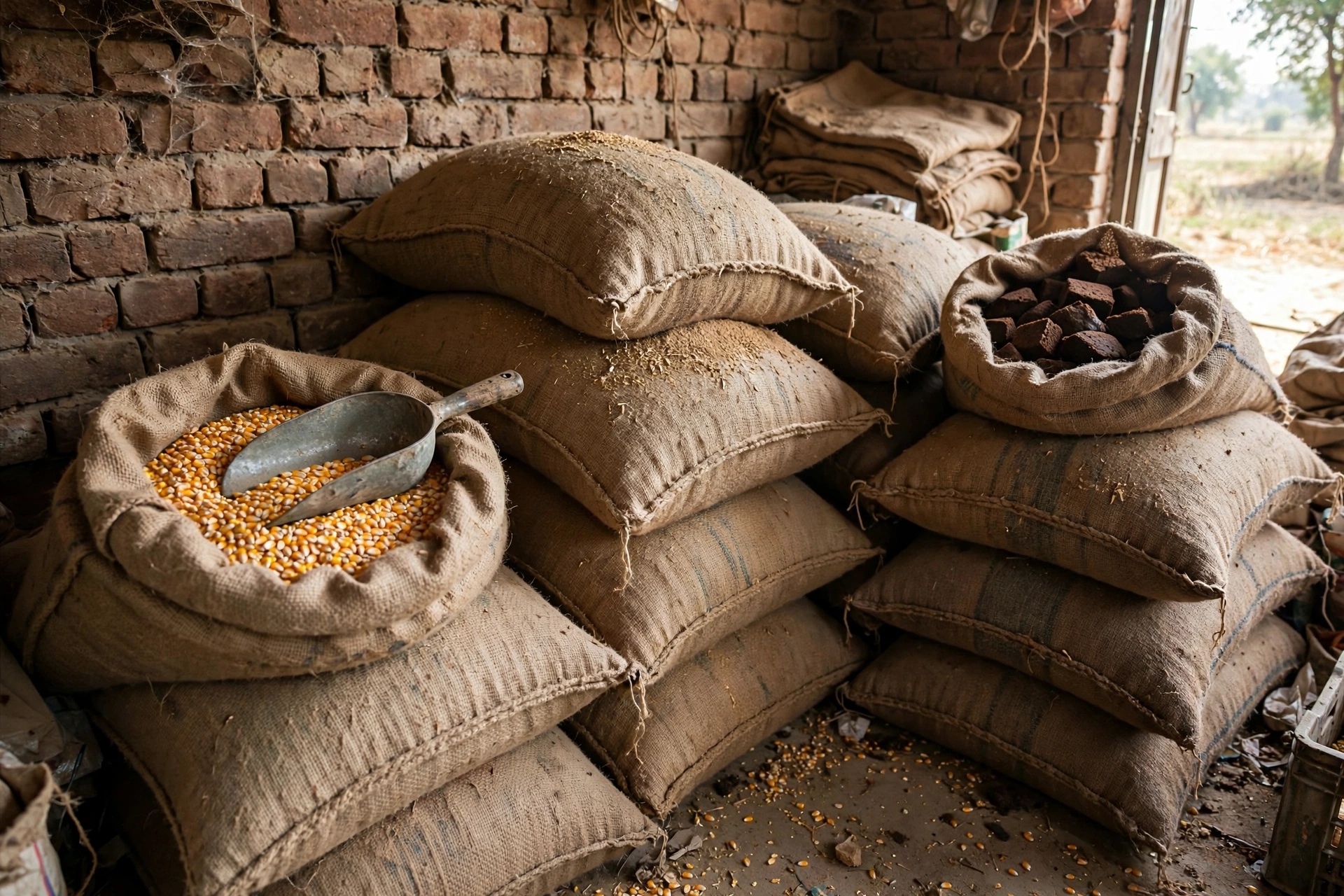
- Store in a dry, raised place — gunny bags on wooden pallets, never directly on a damp floor.
- Use the mix within 30–45 days in summer. Rancidity and fungal growth set in fast in heat and humidity.
- If you smell mustiness or see clumping, do not feed it. Aflatoxin poisoning from mouldy cake is a real and common killer, and it also contaminates milk.
- During monsoon, consider adding a feed-grade toxin binder (available at any veterinary store) at the recommended rate.
Cost Comparison: Home vs Market Vanda
Let me be straight about the economics, because this is usually the deciding question. Based on typical grain market prices, a home-mixed vanda usually costs 15–25% less per kilo than a branded bag of similar protein content. On a farm with five milking animals eating 20 kg a day, that saving adds up to several thousand rupees a month.
But the real saving is not the price per kilo. It is control: you know exactly what went in, you can adjust protein for high yielders, and you are never paying for filler. The one cost people forget is their own labour and the risk of a bad ingredient batch — which is why buying cake from a trusted, long-standing supplier matters more than chasing the cheapest rate.
Mistakes I See Every Week
- Feeding the same vanda to dry and milking animals. A dry animal getting a milking formula gets fat; a milking animal getting a maintenance mix loses yield. Feed according to need.
- Sudden changes. Never switch formulas overnight. Mix the old and new over 7–10 days, or you will see loose dung and a dip in milk.
- Skipping minerals. The 2% mineral mixture looks like a small line in the table. It is the difference between an animal that conceives on time and one that stays empty for a year.
- No water discipline. Concentrate without plenty of clean drinking water is a recipe for impaction. Water should be available at all times, not just at milking.
Frequently Asked Questions
Can I use wheat instead of maize in the formula? You can, but grind it coarsely and do not exceed 20–25% of the mix. Wheat ferments faster than maize in the rumen and carries a higher acidosis risk if overfed or finely ground.
How much vanda should a dry (non-milking) animal get? About 1.5–2 kg per day of a maintenance mix, plus good fodder. The goal is to maintain body condition, not to fatten. Overfeeding concentrates in the dry period is a leading cause of milk fever after calving.
My animal refuses the new home-mixed vanda. What do I do? Introduce it over a week, mixing increasing amounts into the old feed. Mustard cake in particular tastes bitter at first. A pinch of jaggery (gur) in the first few days helps acceptance.
Is home-mixed vanda safe for pregnant animals? Yes, provided the formula matches her stage and the ingredients are clean and mould-free. In the last two months of pregnancy, gradually increase concentrate so her rumen adapts before calving — this “steaming up” prevents the energy crash that follows calving.
That buffalo near Gujranwala? We fixed her ration with a home-mixed formula, added minerals, and got her green fodder sorted. Three months later she was at seven and a half litres. No new animal, no expensive medicine — just feed done right. Most of the “low milk” cases I see are feed cases wearing a disguise. Start with the formula, and you will be surprised how many problems solve themselves.
Disclaimer: This article is for educational purposes only and is not a substitute for professional veterinary advice. Feed requirements vary with breed, body weight, milk yield, and local conditions. Please consult your local veterinarian before making major changes to your animals’ diet, especially for pregnant, sick, or high-yielding animals.