Artificial Insemination in Cattle: Process, Timing and Success Tips
There is a quiet revolution that has already happened on our dairy farms, and most farmers never noticed it. Fifty years ago, breeding a buffalo meant walking her to the village bull. Today, a straw of semen from a genetically superior bull — one your animal could never meet in real life — arrives in a flask of liquid nitrogen at your farm gate. Artificial insemination is the cheapest genetic upgrade in all of animal husbandry.
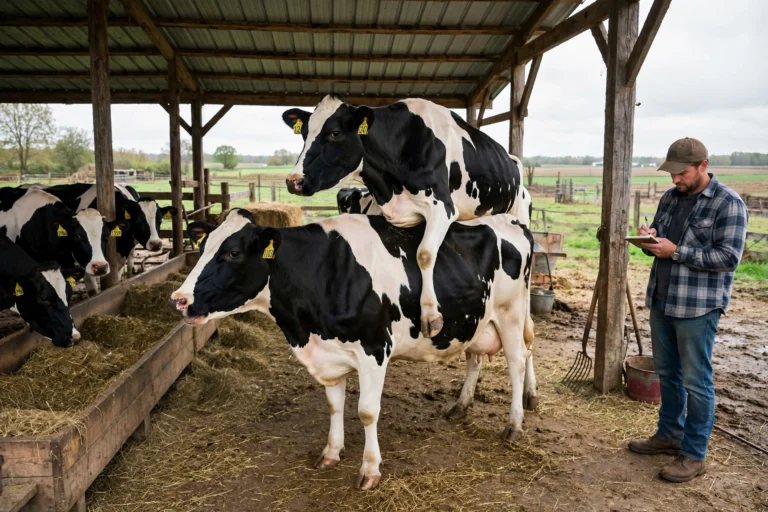
And yet, when I ask farmers about their AI results, I hear the same frustration: “Teeka lagwaya tha, doctor sahab, lekin thehri nahi” — we got her inseminated, but she did not conceive. In most cases the technique is not the problem. The timing, the heat detection, or the animal’s condition is. Let us go through the whole process properly.
AI vs Natural Service: An Honest Comparison
Natural service has one advantage: the bull does your heat detection and timing for you. But it carries real costs — maintaining a bull is expensive, a village bull’s genetics are usually average at best, and bulls spread diseases like brucellosis and trichomoniasis from farm to farm. I have traced more than one abortion storm back to a shared village bull.
AI gives you access to progeny-tested bulls with known milk-transmission records, eliminates disease transmission through mating, and costs a fraction of keeping a bull. Its demand on you is simple: you must detect heat accurately and call the technician at the right time. Do that, and AI outperforms natural service in almost every well-managed herd I know.
The Process, Step by Step
Knowing what happens helps you judge whether it is being done right:
- Heat detection — you observe standing heat and note the time (see our heat detection guide).
- The call — you contact your AI technician promptly, telling him when signs were first seen.
- Semen thawing — the technician removes a straw from the liquid nitrogen container and thaws it, usually in warm water at about 37°C for 30 seconds. The straw must be used within minutes of thawing — semen does not wait.
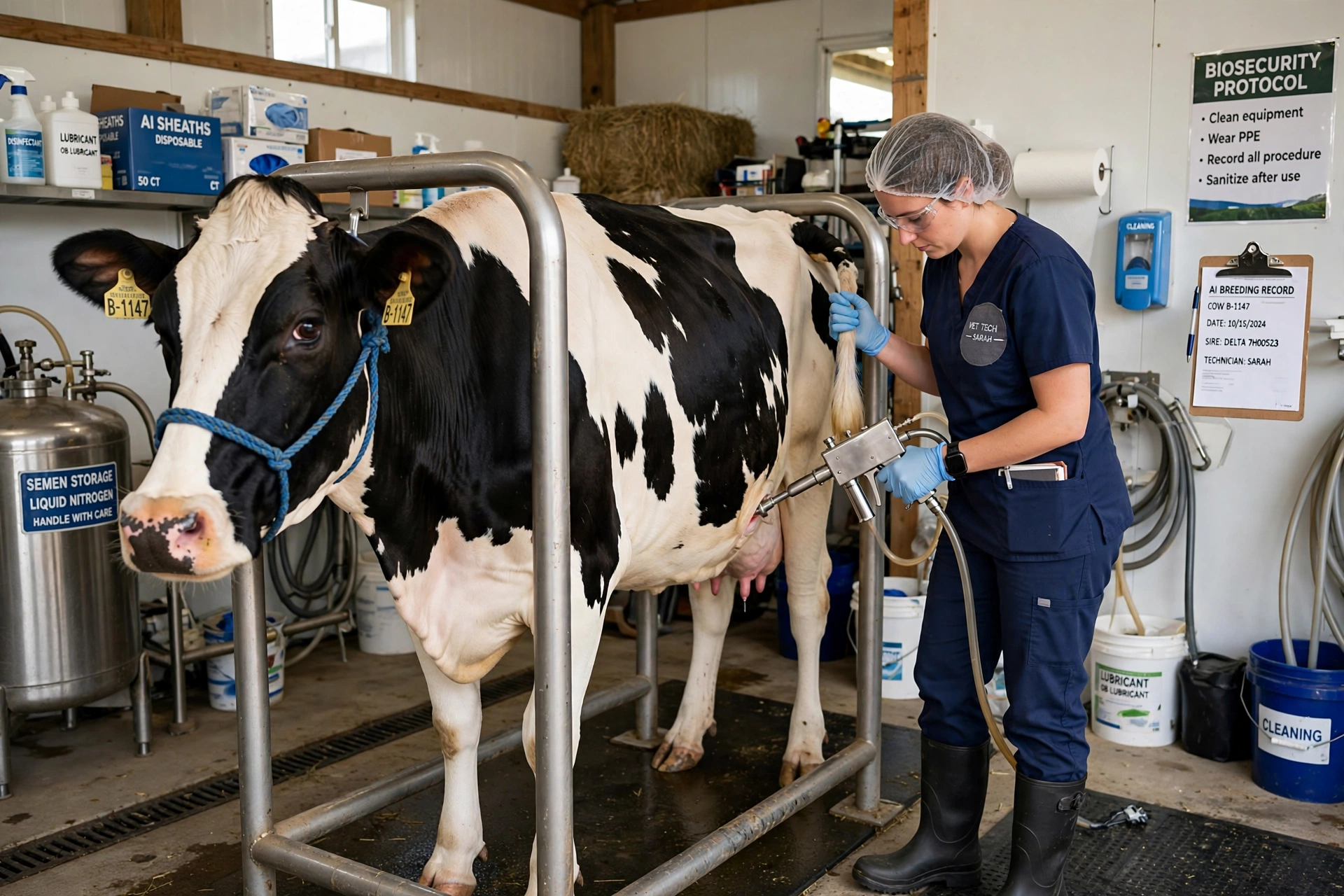
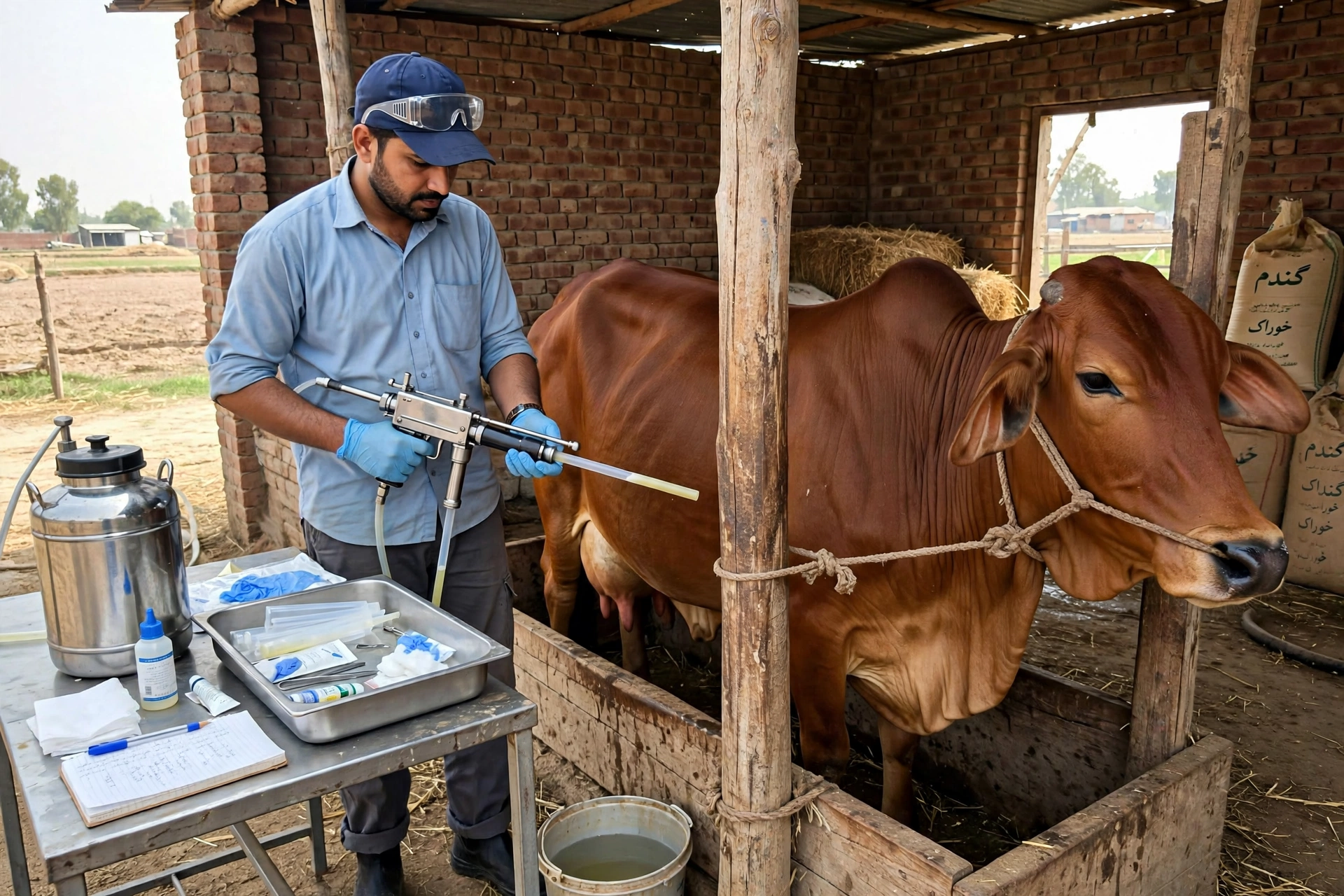
- Loading and insertion — the straw is loaded into the AI gun, covered with a sheath, and the technician passes it through the cervix, depositing semen in the body of the uterus.
- Hygiene throughout — clean hands, clean equipment, a clean vulva. Contamination at this stage is a direct route to uterine infection.
A skilled technician completes the insemination in a few minutes. The animal should be restrained calmly — stress and struggling at the moment of AI measurably reduce conception.
Timing: The AM-PM Rule
If you remember one thing from this article, make it this. Ovulation happens toward the end of standing heat, and sperm need several hours in the reproductive tract to become capable of fertilisation. The window that works:
- Heat seen in the morning → inseminate that evening
- Heat seen in the evening → inseminate the next morning
That is the AM-PM rule: roughly 12 hours after the start of standing heat. Inseminate too early and the sperm die waiting; too late and the egg is gone. When farmers tell me AI “does not work” on their farm, wrong timing is the cause more often than anything else — usually because the heat was actually noticed half a day late.
Semen Handling: What Can Go Wrong Before the Gun
Semen is alive and fragile. A surprising share of AI failures trace back to handling, not to the animal:
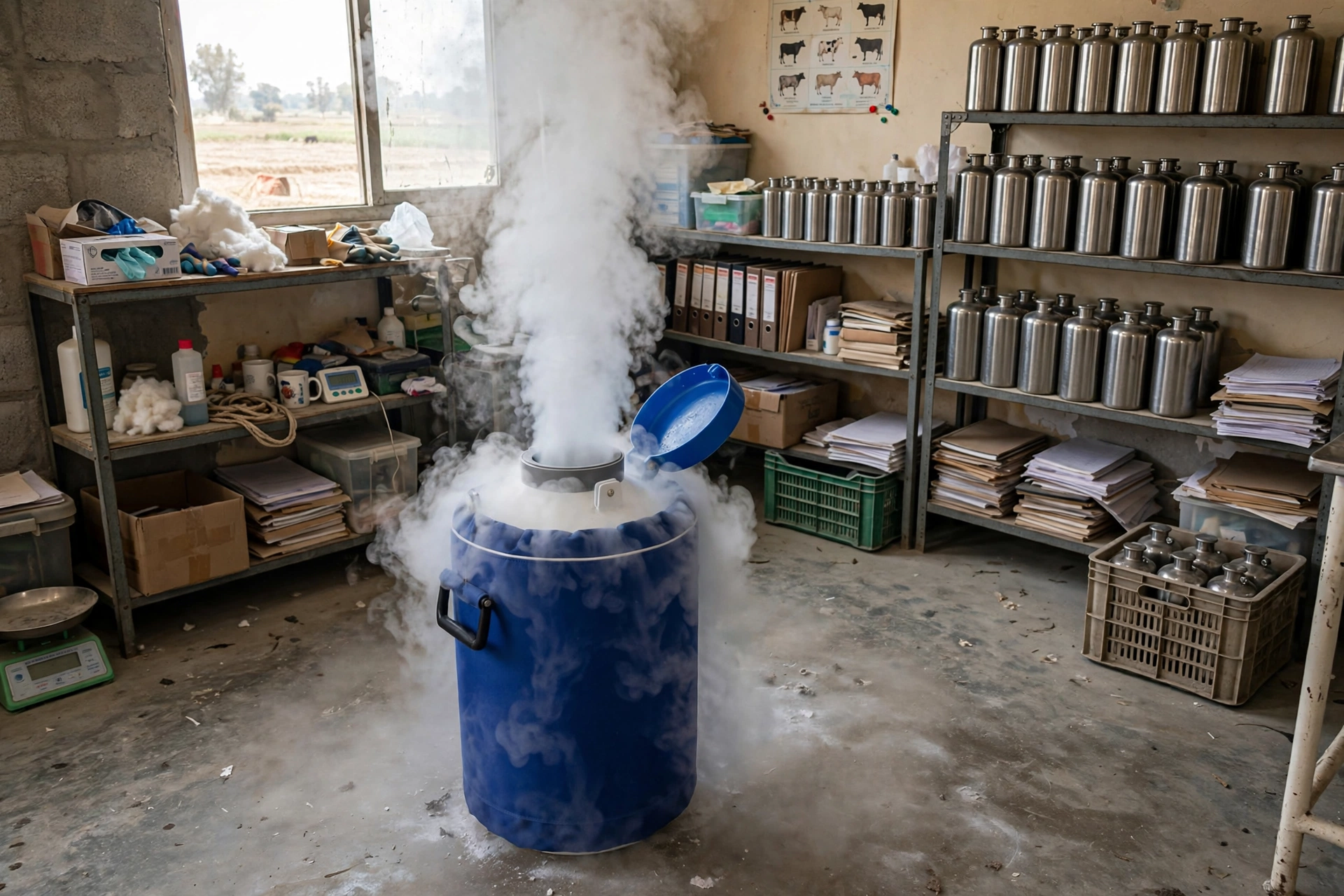
- The nitrogen container must never run dry. Ask your technician — a reputable one checks levels regularly. Semen stored in a dry or low-nitrogen container is dead semen.
- Straws must stay submerged until the moment of thawing. Every unnecessary lift of the canister exposes straws to temperature shock.
- Thaw correctly — warm water, correct temperature, correct time. Thawing in a pocket, in the sun, or in cold water damages sperm.
- Use quickly after thawing. The “15-minute rule” is real: inseminate within 15 minutes of thawing, sooner if possible.
Why AI Fails: The Top Reasons From the Field
In my experience, ranked by how often I encounter them:
- Wrong timing — late heat detection or delayed technician arrival. The single biggest factor.
- Poor heat detection — inseminating an animal that was not truly in heat. If she was never ovulating, nothing could have worked.
- Animal not fit for breeding — thin animals, animals with uterine infection (white side test or cloudy mucus are warning signs), or those bred too soon after calving.
- Semen quality and handling — as above.
- Faulty technique — semen deposited in the cervix instead of the uterus, or rough handling causing trauma. This is why technician skill matters.
- Heat stress — summer inseminations conceive at noticeably lower rates. Shade, water, and cool hours help.
Notice what is not on this list: “the straw was bad.” Farmers blame the semen first; in my casework, the semen is guilty last.
Pregnancy Diagnosis: When Will You Know?
After insemination, the waiting begins. Here is the realistic timeline:
- Day 18–24: watch for return to heat. No heat is the first hopeful sign — but silent heats happen, so it is not proof.
- Day 45–60: rectal palpation by your veterinarian. This is the standard, reliable confirmation. Earlier palpation is possible for experts but carries more risk of error and of disturbing an early pregnancy.
- Day 60+: some vets use ultrasound for earlier and more detailed diagnosis where available.
If she returns to heat at 21 days, re-inseminate and note it. Three consecutive failures make her a repeat breeder — stop repeating the same insemination and get a full reproductive examination instead. Continuing to inseminate a problem animal is just burning money and time.
Record Keeping: The Unsexy Habit That Pays
I will end the practical section with the habit that separates professional dairies from the rest: write everything down. For each breeding, record the animal’s ID, heat date and time observed, insemination date and time, technician name, bull/straw ID, and the outcome. A simple notebook works; a wall chart works.
These records tell you your real conception rate, identify repeat breeders early, predict calving dates, and stop you from inseminating an already-pregnant animal — a mistake I see more often than anyone admits.
Frequently Asked Questions
How many times can a buffalo be inseminated in one heat? Once, done at the right time, is the standard. A second insemination 12 hours later is sometimes used for valuable animals, but routine double insemination wastes semen and money without meaningfully improving results.
Is AI safe? Can it injure the animal? When done by a trained technician with proper hygiene and gentle technique, AI is very safe. Injury happens with rough, unskilled handling — another reason to choose your technician by reputation, not just by who is cheapest.
My cow conceived to natural service but not to AI. Should I give up on AI? No — that pattern almost always points to timing or heat detection, not to AI itself. The bull was compensating for late detection by breeding at the right biological moment. Tighten your observation routine and call the technician earlier, and AI results usually match or exceed natural service.
Can I use AI on a buffalo in summer? Yes, but expect lower conception rates in peak heat. Breed during cooler hours, ensure shade and water, and be extra careful with heat detection since summer signs are weaker. Some farmers deliberately plan breedings to avoid the worst heat — that is smart management, not superstition.
A straw of semen is a remarkable thing: the genetics of a great bull, frozen in time, delivered to your farm for the price of a few kilos of feed. But it is only as good as the timing, the technique, and the condition of the animal receiving it. Get those three right — watch your heats, call on time, keep her fit — and AI will do for your herd in one generation what natural service could not do in five.
Disclaimer: This article is for educational purposes only and is not a substitute for professional veterinary advice. Artificial insemination should be performed by a trained technician, and reproductive problems should be evaluated by your local veterinarian.