Heat Detection in Cows and Buffaloes: Signs Every Farmer Must Know
Every missed heat costs a farmer 21 days. Twenty-one days of feeding an empty animal, 21 days of lost milk in her future lactation, 21 days pushing her calving — and her next calf — further away. When I sit down with a farmer whose buffalo has not conceived for eight months, the cause is rarely some exotic disease. It is almost always this: heats were happening, and nobody noticed.
Heat detection is the single highest-return skill on a dairy farm. It costs nothing, needs no equipment, and yet it is where most breeding programmes quietly fail. Let me walk you through exactly what to watch for.
What “Heat” Actually Means
Heat (estrus) is the 12–18 hour window when a female is receptive to mating and can conceive. It repeats roughly every 21 days in both cows and buffaloes. Ovulation happens near the end of heat — which is why timing matters so much for artificial insemination. Inseminate too early or too late, and even perfect semen is wasted.
A healthy, well-fed cow or buffalo shows her first heat 40–60 days after calving. If she is not cycling by 90 days, that is a problem worth investigating, not waiting out.
Signs of Heat in Cows
Cows are, relatively speaking, honest about being in heat. Watch for:
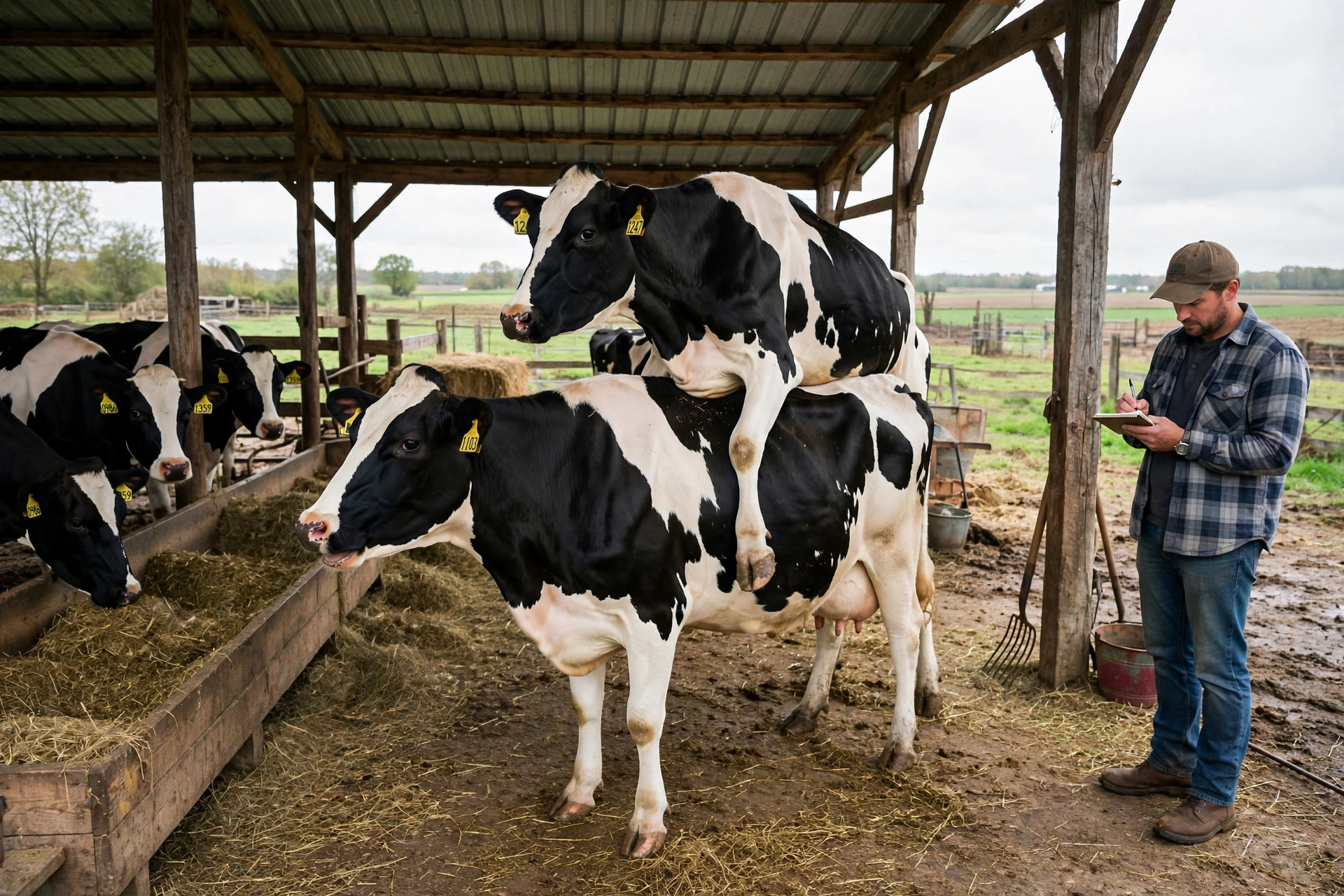
- Standing to be mounted — the one definitive sign. A cow in true standing heat stands still when another animal mounts her. Everything else is supporting evidence; this is the proof.
- Restlessness and bellowing — pacing, calling, reduced interest in feed.
- Mounting other animals — she will try to mount herdmates before she herself stands.
- Clear mucus discharge — a transparent, stretchy discharge from the vulva that can stretch several inches without breaking. Thick or cloudy mucus suggests infection, not healthy heat.
- Swollen, reddened vulva and frequent urination.
- Drop in milk yield — a subtle but real dip on the day of heat.
Cows in our region often show heat clearly in the cooler hours. If you only check animals at noon in July, you will miss half of them.
Buffaloes: The Silent Heat Problem
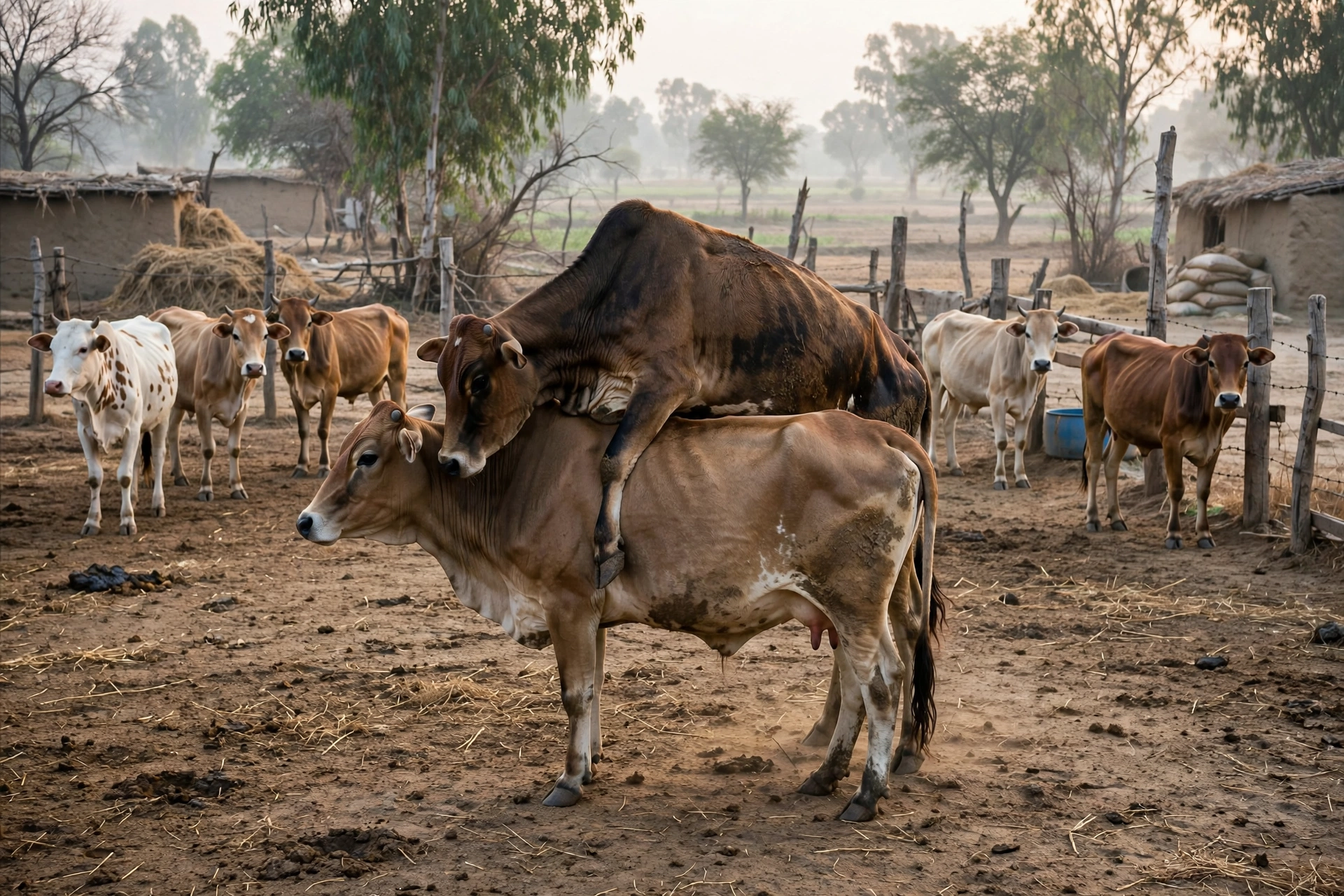
Now the critical difference, and the reason this article exists: buffaloes are notorious for silent or weak heat expression. Where a cow announces herself, a buffalo whispers.
Many buffaloes, especially in summer, show few or no mounting behaviours. The signs are subtler: slight restlessness, reduced feed intake, a small amount of clear mucus, frequent bellowing at night, and — the most reliable subtle sign — she may simply stand near the bull or the boundary, looking toward other animals.
Why is this worse in buffaloes? Two reasons I see in the field. First, heat stress: buffaloes suffer in summer heat, and their already-subtle signs nearly vanish from May to August. Second, nutrition: a buffalo in negative energy balance after calving will cycle weakly or not at all. An animal that is thin will not show heat, no matter how carefully you watch.
This is why “my buffalo never comes in heat” is one of the most common complaints I hear — and why the animal is very often cycling silently while the farmer waits for dramatic signs that will never come.
When and How to Watch
Detection is a discipline, not a talent. Here is the routine that works:
- Watch three times a day for 20–30 minutes: early morning (before 7 am), late afternoon, and evening after sunset. Buffaloes very often show heat at night — a quick check with a torch before bed catches heats that daytime watching misses entirely.
- Watch undisturbed animals. Do not check right after feeding or milking, when every animal is restless anyway. Quiet observation shows you the real behaviour.
- Know each animal. The farmer who knows that “Kali always bellows on her heat day” will beat any technology. Individual patterns repeat.
- Keep a simple heat calendar. Note every suspected heat date on a wall chart or notebook. If she returns in 18–24 days, your detection was probably right. If she was inseminated and returns in 21 days, she did not conceive — and now you know exactly when to call the technician again.

Heat Detection Aids Worth Using
Your eyes are the main tool, but a few cheap aids help, especially for buffaloes:
- Tail paint or chalk: a stripe of paint on the tailhead. When another animal mounts her, the paint smudges or rubs off. Check it twice daily. Simple, cheap, effective.
- Heat mount detectors: small pressure-activated patches stuck on the tailhead that change colour when mounted. More reliable than paint, and worth the small cost for valuable animals.
- A teaser bull: where feasible, a vasectomised bull run with the herd detects heats better than any device. Not practical for every farm, but unbeatable where it is.
What I do not recommend as a starting point: expensive electronic activity monitors. They work, but on a 5–10 animal farm, disciplined observation plus tail paint will match their results at a fraction of the cost.
When to Call the AI Technician
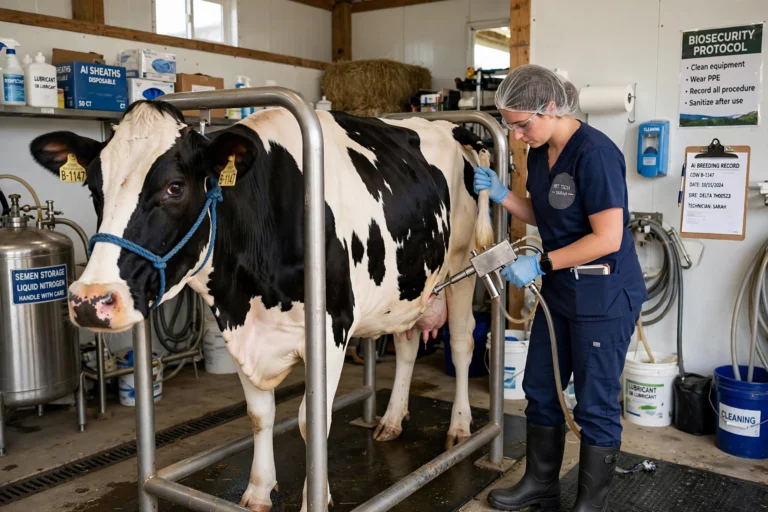
Timing is everything. The standard guidance — the AM-PM rule — is: if you detect heat in the morning, inseminate that evening; if you detect it in the evening, inseminate the next morning. Roughly 12 hours after first observed standing heat is the sweet spot.
Call the technician as soon as you are confident, and tell him when you first noticed the signs — that information helps him judge timing. Keep the animal calm, shaded, and unstressed while you wait. And if the technician cannot reach you within the window, note it honestly in your records rather than inseminating late and hoping.
Frequently Asked Questions
My buffalo shows mucus but no other signs. Is she in heat? Clear, stretchy mucus is a genuine heat sign, especially in buffaloes where other signs are weak. Note the date and watch her closely — if the pattern repeats in about three weeks, you are seeing real heats. When in doubt, have your veterinarian do a rectal examination to confirm she is cycling.
How soon after calving should I breed? Aim to inseminate at the first heat after 60 days post-calving. Breeding earlier risks poor conception; waiting much beyond 90 days stretches your calving interval and costs money every single day.
She was inseminated but came back in heat after 21 days. What now? One return to heat is normal — conception rates per insemination are 50–60% even in good programmes. Re-inseminate on the observed heat. If she fails to conceive after three inseminations, she is a “repeat breeder” and needs a proper veterinary examination for infection, hormonal issues, or anatomical problems.
Does heat stress really suppress heat signs? Absolutely, and I see it every summer. Provide shade, cool drinking water, and if possible wallowing or sprinkling for buffaloes in the hot months. Animals under heat stress show weaker heats and conceive poorly even when inseminated on time.
I once worked with a farmer who was convinced his three buffaloes were “banjh” — barren. We put up a wall chart, started tail paint, and did evening checks for one month. All three were cycling normally; he had simply never caught a single heat. Within four months, two were confirmed pregnant. The animals were fine. The watching was missing.
Heat detection is not luck. It is twenty minutes, three times a day, with your eyes open and a pencil in your pocket. Master that, and your calving interval — and your income — will show it.
Disclaimer: This article is for educational purposes only and is not a substitute for professional veterinary advice. Breeding decisions, hormonal treatments, and reproductive examinations should always involve your local veterinarian, who can assess your animals individually.