Starting a 10-Buffalo Dairy Farm: Complete Business Plan and Cost Guide
Every month I meet at least one farmer who walks into my clinic and says, “Doctor sahab, I want to buy ten buffaloes and start a dairy farm.” And every month, I give them the same honest answer: buying buffaloes is the easy part. Keeping them profitable is where the real work begins.
A 10-buffalo dairy farm can be a genuinely good business. I have watched many farmers build a stable income from exactly this size of unit — not too small to be worth the effort, not so big that one bad month sinks you. But I have also watched many lose lakhs in the first year because they planned for the best case and never thought about the worst one.
So let me walk you through what a realistic plan actually looks like, based on what I have seen work — and fail — in the field.
Why Ten Buffaloes?
Ten animals is a sweet spot for a beginner who is serious about farming as a business. Two or three buffaloes is a household activity — the milk feeds the family and maybe earns a little extra. Fifty buffaloes needs hired labour, proper management systems, and serious capital. Ten lets you learn the business, handle most of the work with family labour, and still earn a meaningful monthly income.
Most importantly, ten animals give you a buffer. If two buffaloes are dry (not giving milk) at any given time, you still have eight producing. With only three animals, one dry buffalo and one sick buffalo leaves you with one animal’s milk — and that is when farmers start selling animals in panic.
The Real Startup Cost Breakdown
Let me give you realistic figures. Prices vary by district and season, but these ranges hold across most of Punjab and Sindh, and much of India as well.
Purchasing the Animals
This is your biggest expense, and where most people go wrong. A good milking buffalo — healthy, second or third lactation, giving 10–12 litres a day — currently costs between PKR 350,000 and PKR 500,000. For ten animals, that is PKR 3.5 to 5 million.
Here is what I tell every farmer: never buy all ten from one mandi on one day. Buy in batches of two or three. Why? Because every new animal brings stress, and stressed buffaloes from a strange place often fall sick in the first month. If you buy ten together and half of them get sick, your farm is in trouble before it starts. Buy three, settle them for three weeks, then buy the next batch.
Also, buy milking buffaloes, not “fresh calvers” promised at peak yield. A buffalo that is already two months into her lactation shows you her real, settled milk — what you see is closer to what you will get. Sellers inflate promises about a buffalo that “will give” 16 litres. The one already giving 11 litres is the safer bet.
Shed and Infrastructure
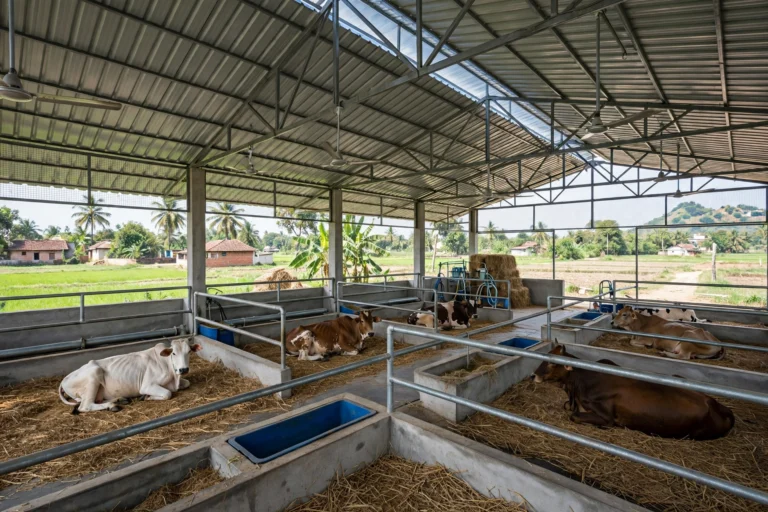
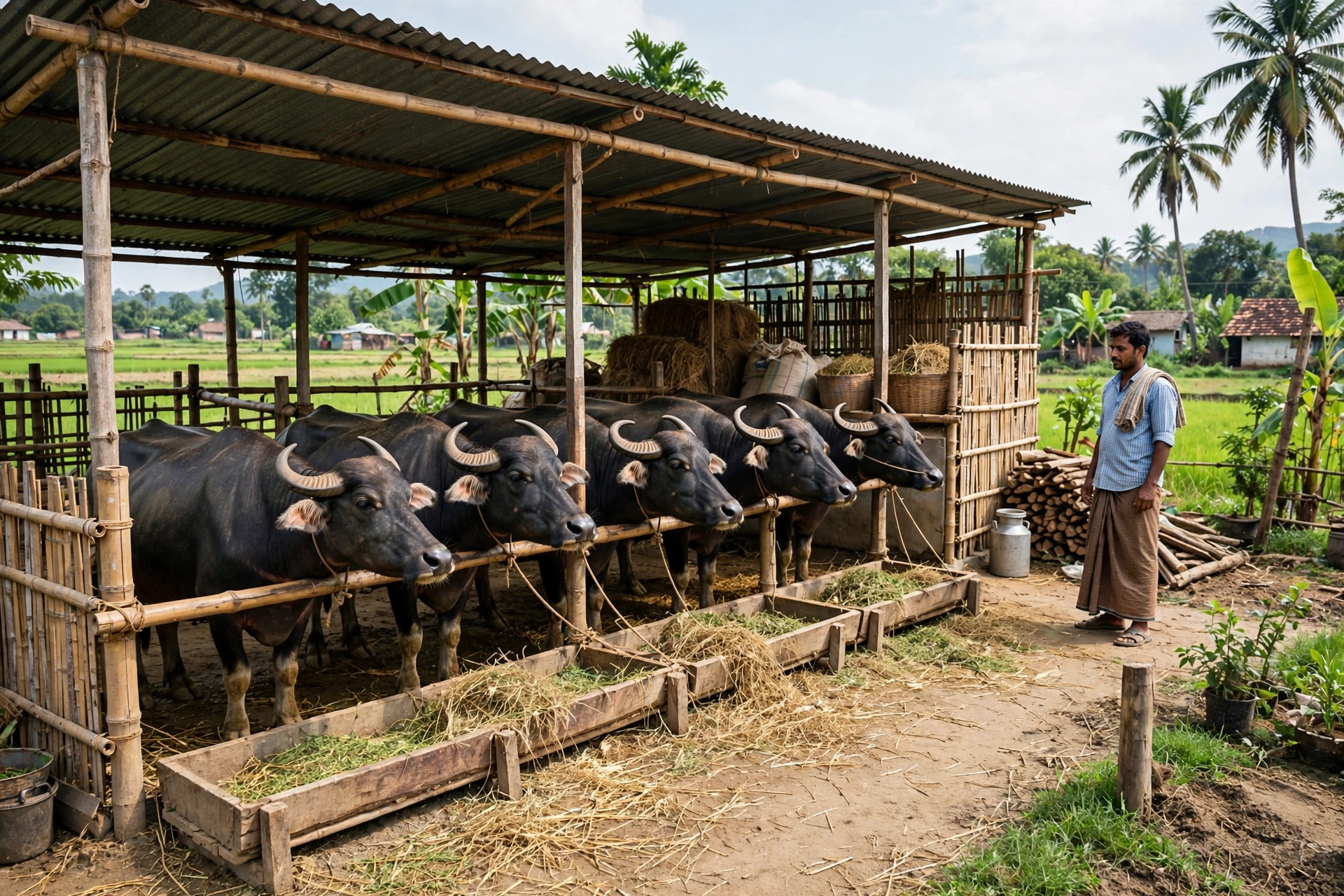
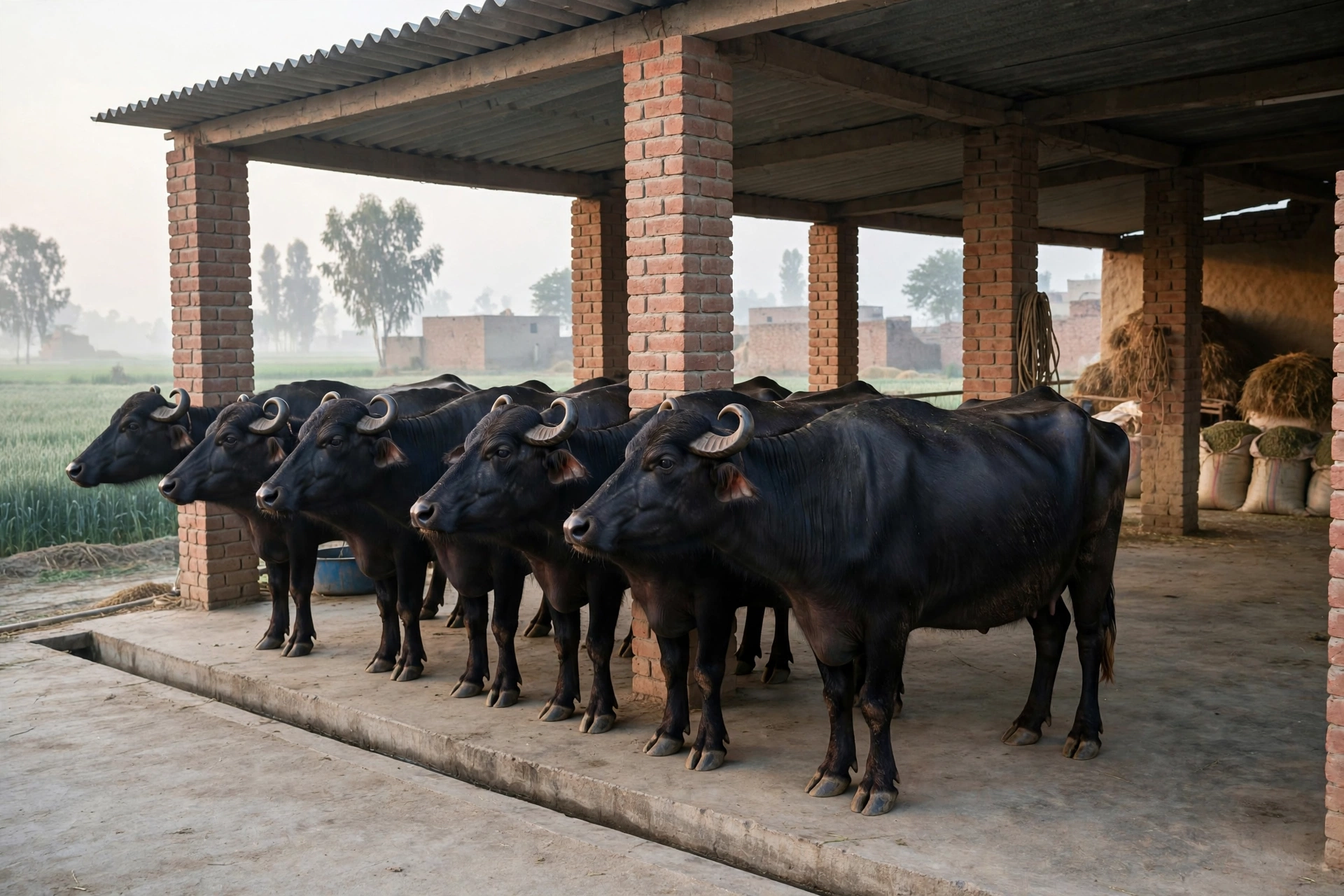
For ten buffaloes, you need roughly 1,200 to 1,500 square feet of covered shed plus an open paddock area. A solid but economical shed — brick pillars, asbestos or corrugated sheet roof, concrete floor — typically costs PKR 400,000 to 600,000.
You can absolutely start cheaper with a simpler open shed, and honestly, in our climate, buffaloes often do better in airy, simple sheds than in expensive closed buildings. But do not compromise on two things: roof height (at least 10–12 feet for air circulation) and proper drainage. A shed where urine pools around the animals’ feet will cost you in mastitis and hoof problems within months.
Equipment
You will need:
- Feeding mangers or feed troughs
- Water troughs (at least two, so dominant animals do not block others)
- Milk cans and basic milking utensils
- A chaff cutter (electric, around PKR 40,000–60,000) — this pays for itself quickly by reducing fodder waste
- Basic first-aid supplies: thermometer, hoof trimmer, wound spray, antiseptic, ORS packets
Budget around PKR 100,000 to 150,000 for equipment.
Feed Stock for the First Month
Buy your first month’s concentrate (vanda) and dry fodder before the animals arrive. Ten buffaloes eat roughly 150–200 kg of green fodder and 40–50 kg of concentrate daily. Your first month’s feed bill will be around PKR 150,000 to 200,000.
Total Startup Cost
Adding it up: PKR 4.2 to 6 million for a properly set-up 10-buffalo farm. Anyone telling you that you can do it for 2 million is either cutting corners that will cost you later, or buying very poor-quality animals.
Monthly Running Costs
This is the number that actually decides your profit. For ten milking buffaloes:
- Green fodder: If you grow your own on 4–5 acres, this costs you labour and inputs. If you buy, budget PKR 80,000–100,000/month. Growing your own fodder is the single biggest cost saver in this business.
- Concentrate (vanda): 10 buffaloes × ~4.5 kg/day × 30 days ≈ 1,350 kg. At current prices, PKR 130,000–160,000/month.
- Dry fodder (wheat straw/bhoosa): PKR 25,000–35,000/month.
- Labour: One worker can manage ten buffaloes. Budget PKR 35,000–45,000/month. If family does the work, this becomes your savings.
- Veterinary and medicines: Budget PKR 15,000–20,000/month averaged over the year. Some months are zero, then one sick buffalo costs you 25,000 in a week.
- Miscellaneous (electricity, water, repairs): PKR 10,000–15,000/month.
Total monthly running cost: roughly PKR 300,000 to 370,000.
Expected Milk Income — The Honest Version
Let me be realistic, because inflated numbers are what destroy new farms. Ten buffaloes will not all be in milk at the same time. In any given month, expect 7–8 in milk and 2–3 dry or in early/late lactation.
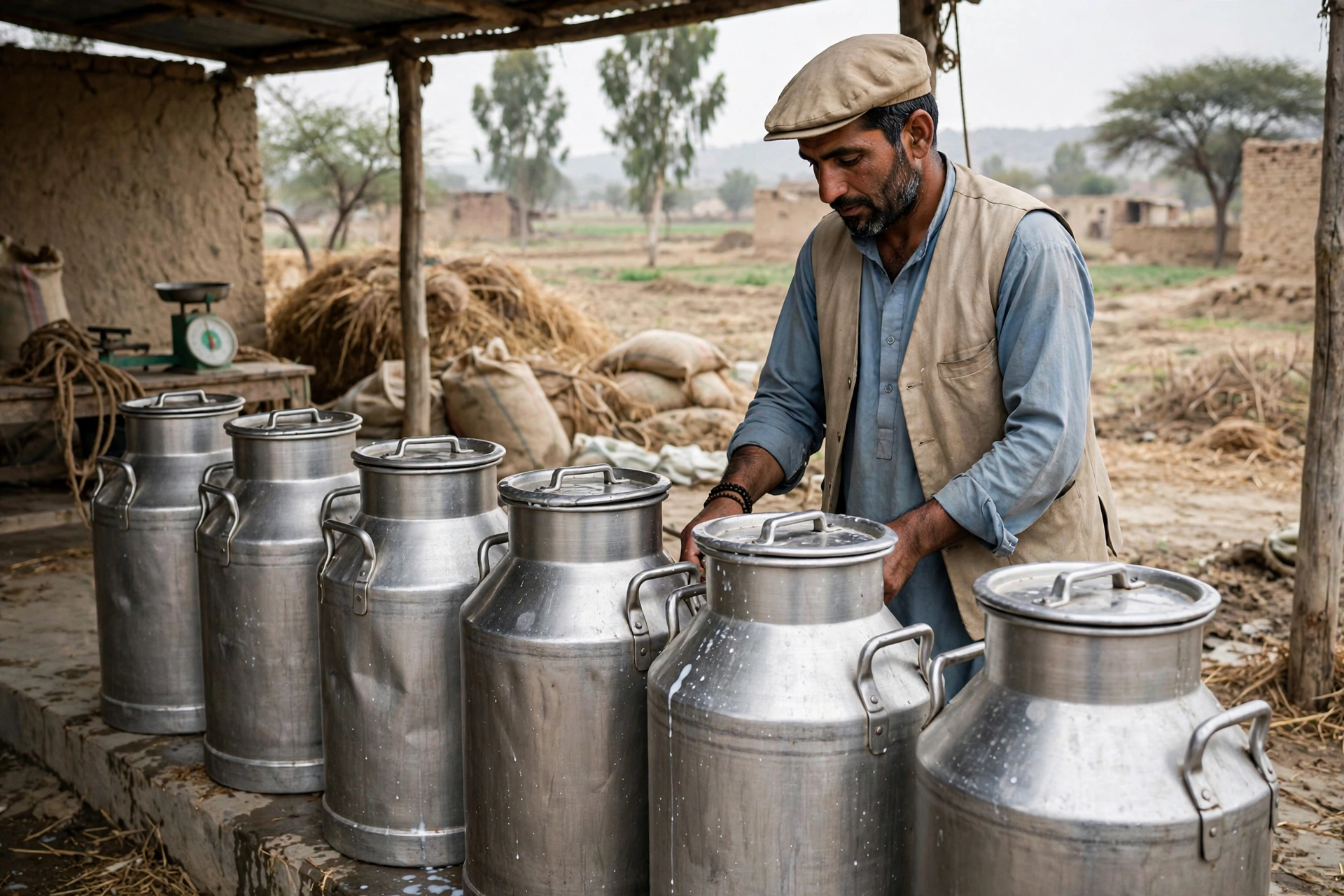
At an average of 9–10 litres per buffalo per day (a realistic settled average, not the seller’s promise), eight milking buffaloes give you roughly 250–280 litres per day. At PKR 160–180 per litre (retail or good bulk rate), that is PKR 1.2 to 1.5 million per month in gross income.
Subtract monthly costs of ~PKR 350,000, and your monthly profit lands around PKR 850,000 to 1.1 million — in a good, well-managed month. In a bad month — two animals dry, one sick, fodder prices up — it might be half that.
These are real numbers, but they assume competent management. Poor feeding alone can cut your milk by 20–30%, which is the difference between profit and loss.
Break-Even Timeline
If things go reasonably well, expect to recover your initial investment in 2.5 to 3.5 years. That sounds long, but remember: your animals also produce calves each year, which are assets. A good female calf, raised well, becomes a milking buffalo worth lakhs in three years. Smart farmers count calf-rearing as a second income stream, not a cost.
The first year is the hardest. You are learning, your animals are settling, and unexpected expenses appear. Year two is where most well-planned farms stabilise.
Should You Start With 2–3 Animals First?
Honestly? For most first-timers, yes. Here is why I recommend it despite having just written a 10-buffalo business plan:
Your first three buffaloes are your education. You will learn feeding, heat detection, milking routine, and basic health care with a manageable number of animals. Mistakes with three animals cost thousands; mistakes with ten cost lakhs.
If you already have dairy experience — you grew up around buffaloes, you know heat signs, you have handled calvings — then ten is fine. But if this is genuinely new, start with three, run them for six months, and expand when you feel the routine in your bones. The farm you build slowly survives; the farm built in a hurry often does not.
The Biggest Beginner Mistakes I See
- Buying on looks alone. A shiny, fat buffalo is not necessarily a good milker. Ask for the milking record, milk her yourself before buying, and check her udder for old mastitis damage.
- No fodder plan. Farmers buy animals first and then scramble for fodder daily. Your fodder plan should exist before your first buffalo arrives.
- Ignoring the dry period. Buffaloes need 60 days of dry rest before calving. Farmers who milk right up to calving get a weak calf and a poor next lactation.
- No records. If you do not write down each animal’s milk, heat dates, and treatments, you are farming blind. A simple notebook per animal is enough.
- Skipping vaccinations. HS and FMD vaccines cost a few hundred rupees per animal. One outbreak costs you lakhs. This is the cheapest insurance in farming.
Frequently Asked Questions
How much land do I need for a 10-buffalo farm? For the shed and paddock, about half an acre is enough. But for fodder, you need 4–5 acres of your own or leased land to grow year-round green fodder. Buying all your green fodder from the market seriously eats into profit.
Is a bank loan advisable for starting? Only if you have experience. Interest payments during the difficult first year can strangle a new farm. If you must borrow, borrow less than you think you need and keep a cash reserve of at least three months’ running costs.
Buffalo or cow — which is better for a beginner? In Pakistan, buffalo milk sells at a premium because of its fat content, and buffaloes handle our heat reasonably well. Crossbred cows give more milk but are more disease-prone and need better management. For a beginner, buffaloes are the more forgiving choice.
When is the best time to buy buffaloes? Prices are usually lower in summer when milk production is naturally low and some farmers sell. Avoid buying at peak festival seasons when mandi prices spike. Whatever the season, buy healthy animals over cheap ones — a cheap sick buffalo is the most expensive purchase you will ever make.
Final Word
A 10-buffalo dairy farm is one of the most honest businesses I know. The animals do not lie — feed them well and they give milk; neglect them and the milk drops within days. If you plan carefully, start at the right scale for your experience, keep records, and respect the animals’ health, this business will reward you for years. Take your time with the planning. The farm can wait; a rushed start cannot be undone.
Disclaimer: This article is for educational purposes only and is based on general field experience. Costs, prices, and yields vary by region and season. It is not a substitute for professional financial advice or the guidance of your local veterinarian, who should be consulted for animal health decisions on your farm.