Foot-and-Mouth Disease in Cattle: Identification, Treatment and Control
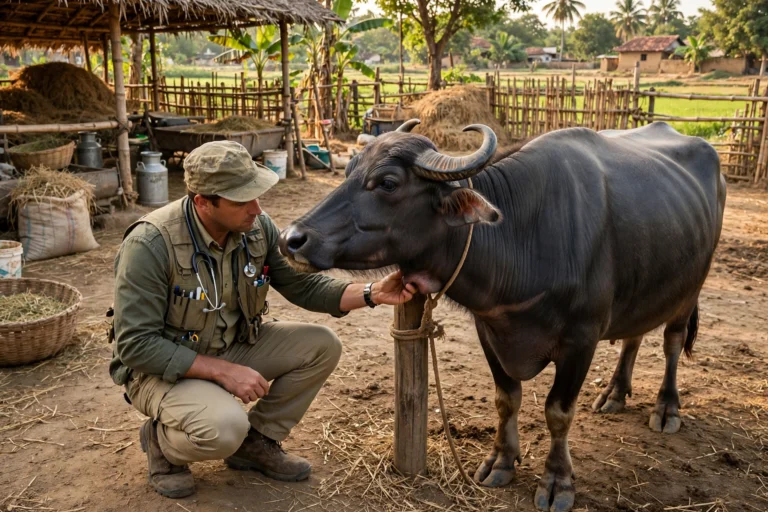
Ask any dairy farmer who has lived through a foot-and-mouth disease outbreak and you will see the same expression — a tired shake of the head. “Do mahine doodh khatam,” they say. Two months of milk, gone. The animal survives, usually, but the farmer’s income does not. That is the real story of FMD: it is not always the biggest killer, but it is one of the biggest thieves in dairy farming.
In my years of practice, I have walked into barns where half the herd was standing with their heads hanging, drool pouring from their mouths, refusing to eat or walk. The smell of an FMD outbreak is something you do not forget. Let me walk you through what this disease is, how to spot it early, and — most importantly — how to keep it out of your farm.
What Is Foot-and-Mouth Disease?
Foot-and-mouth disease (FMD) is a highly contagious viral disease that affects cattle, buffaloes, goats, and sheep. It is caused by the foot-and-mouth disease virus, which comes in several types (O, A, and Asia-1 are the ones we deal with most in this region).
Here is what makes FMD special — and dangerous: it spreads faster than almost any other livestock disease. The virus travels in saliva, milk, urine, dung, breath, and even on the wind over short distances. It survives on clothes, shoes, vehicle tyres, and feeding equipment. One sick animal at a cattle market can seed an outbreak across a whole district.
The good news? Most adult animals recover in two to three weeks. The bad news? During those weeks, milk production can crash to nearly zero, animals lose weight, and young calves can actually die from it. And some recovered animals become carriers, quietly shedding virus for months.
How to Identify FMD: The Classic Signs
FMD has one of the most recognizable symptom patterns in veterinary medicine. Once you have seen it, you will never confuse it with anything else.
In the mouth
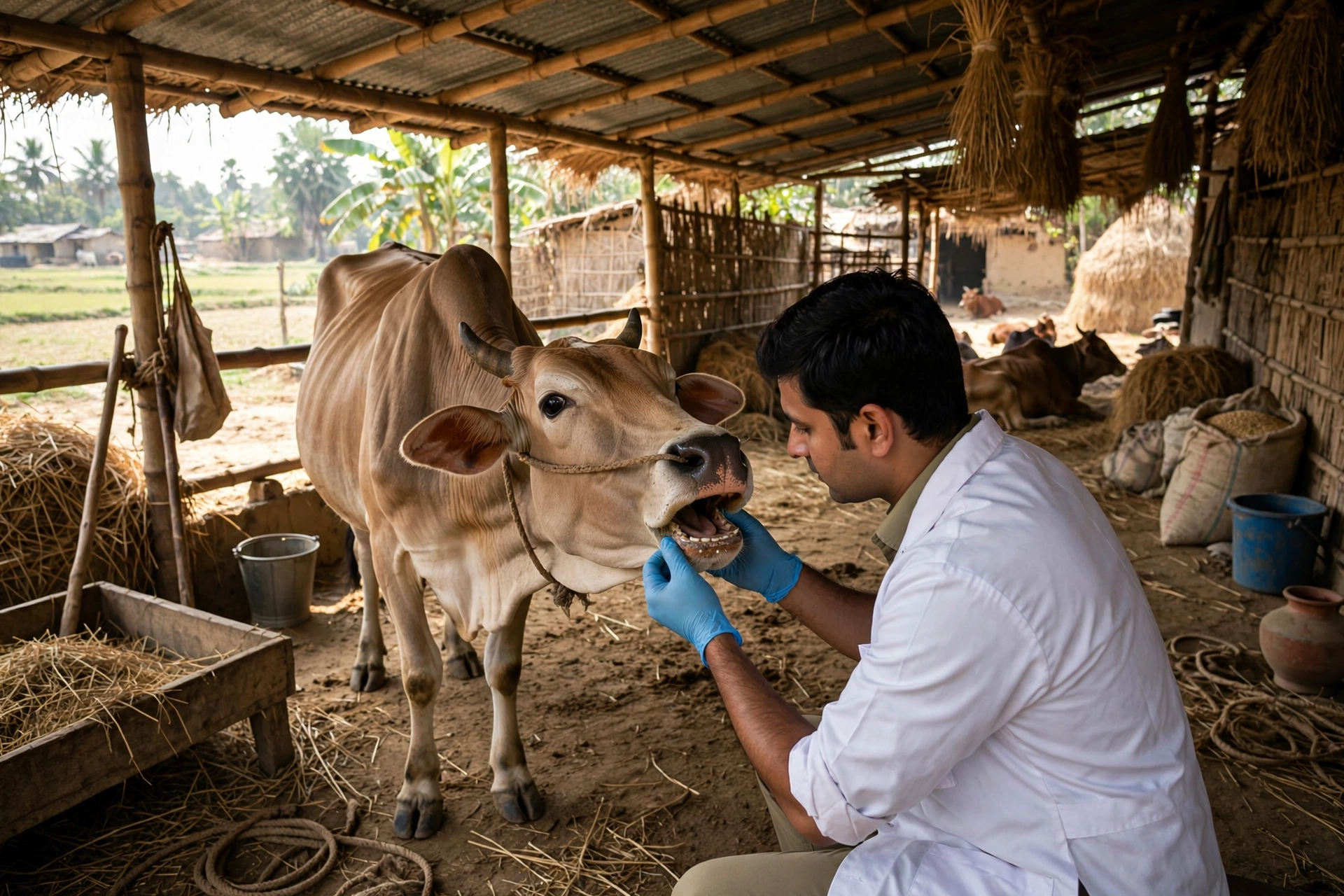
- Blisters (vesicles) on the tongue, gums, lips, and inside of the cheeks — these are the hallmark of FMD
- The blisters burst within a day or two, leaving raw, painful ulcers
- Excessive drooling — thick, ropey saliva hanging from the mouth
- Smacking or champing of the lips, as if chewing constantly
- Complete refusal to eat; the animal may try and then give up because it hurts too much
On the feet
- Blisters between the toes and on the coronary band (where hoof meets skin)
- Sudden lameness — the animal shifts weight, lies down, refuses to stand
- In severe cases the hoof shell can loosen or come off entirely
On the udder
- Blisters on the teats, which make milking agonizing and open the door to mastitis
General signs
- High fever (104–106°F) at the start, before the blisters appear
- Sharp drop in milk yield — often the very first thing a dairy farmer notices
- Depression, shivering, and rapid weight loss
A useful field tip: if several animals in the herd develop drooling and lameness within a few days of each other, think FMD first. Diseases that hit the whole herd at once are almost always contagious, and FMD is the fastest of them.
How FMD Spreads — And Why Quarantine Matters
Understanding the spread is the key to control. The virus leaves a sick animal through:
- Saliva and nasal discharge
- Milk (yes — milk from an infected animal carries the virus)
- Urine and dung
- Fluid from burst blisters
It enters healthy animals through the mouth and nose, and through cuts on the feet. New infections usually come from:
- Buying new animals — the number one cause of farm outbreaks I see. An apparently healthy animal from a cattle market can be incubating FMD.
- Visitors and traders walking between farms in the same shoes
- Shared grazing or watering points
- Vehicles — milk collection vans, feed trucks
- Wind over short distances during active outbreaks
This is why quarantine is not optional. Every new animal should be kept separate for at least two to three weeks, watched for fever and blisters, and vaccinated if its history is unknown — before it ever touches your herd.
Treatment: Nursing Care Is Everything
Here is something many farmers find surprising: there is no specific medicine that kills the FMD virus. Antibiotics do not cure it — the disease is viral. So what does treatment actually mean? It means supporting the animal while its own immune system fights the virus, and preventing secondary infections.
Mouth care
- Wash the mouth gently with a mild antiseptic solution (dilute potassium permanganate is the traditional field choice) once or twice daily
- Offer soft, palatable feed — green fodder, soaked concentrate, gruel. Never force dry, rough feed on a sore mouth
- Clean drinking water must always be available
Foot care
- Clean the feet with antiseptic solution and keep the animal on clean, dry, soft bedding — mud and manure turn a blister into a deep infection
- In severe lameness, some vets bandage the feet with antiseptic dressing
- Watch for foul smell from the feet — that means secondary bacterial infection, and that is when your vet will use antibiotics
Udder care
- Milk gently and completely — leftover milk in a sore udder invites mastitis
- Apply a soothing antiseptic ointment on teat blisters as advised by your vet
General support
- Fever medicine (as prescribed) to bring the temperature down and ease pain
- Antibiotics only if the vet sees signs of secondary bacterial infection — giving them “just in case” wastes money and builds resistance
- Keep the animal calm, shaded, and separate from healthy stock
Most adult cattle recover in 10–14 days with good nursing. But calves are a different story — FMD can attack a young calf’s heart muscle and kill suddenly, with barely any blisters to warn you. If calves are dying during an outbreak, that is the virus at its most dangerous. Protect them first.
Vaccination: Your Real Weapon
FMD is one of the few major cattle diseases where vaccination genuinely works at scale — countries have wiped it out with disciplined vaccination programs. The vaccine used here is typically trivalent, covering the O, A, and Asia-1 strains.
The schedule I advise:
- First dose: at 4 months of age
- Booster: one month after the first dose
- Then: every 6 months, for life
Yes — every six months, not once a year like HS. FMD immunity fades faster, and this is where most farmers slip. They vaccinate in spring, feel safe, and skip autumn. Then winter brings an outbreak.
A few hard-won tips:
- Time it before the risk seasons. Outbreaks often follow animal movements — before Eid cattle markets, before the winter trading season. Vaccinate 3–4 weeks ahead.
- Cold chain is everything. FMD vaccine is fragile. If the vial sat in a hot shop or the ice melted on the way, assume it is dead. Buy from a reliable source, carry it in an ice box, and use it the same day.
- Vaccinate the whole village if you can. FMD control is a team sport. Your vaccinated herd is still at risk if your neighbour’s animals are shedding virus over the fence. Talk to your local veterinary officer about area-wide vaccination drives.
The Economic Impact Nobody Talks About
Farmers often ask me, “Doctor sahib, if the animal recovers anyway, why spend on vaccine?” Let me put it in numbers they understand.
A buffalo giving 10 litres a day, sick for three weeks with FMD, easily loses 150–200 litres of milk. At current milk prices, that is a loss of tens of thousands of rupees — from one animal. Add the weight loss, the delayed next pregnancy (FMD often disrupts breeding cycles), the mastitis cases that follow teat lesions, and the calves that die. A single outbreak on a ten-animal farm can wipe out months of profit.
The vaccine costs a fraction of one day’s milk. It is the cheapest insurance in dairy farming, and I say that as someone who has watched farmers learn this lesson the expensive way.
What To Do the Day You Suspect FMD
If you wake up and find two animals drooling with mouth sores, do this — in this order:
- Isolate the sick animals immediately, downwind and downstream from the healthy ones if possible
- Stop all animal movement — no buying, no selling, no taking animals to common grazing
- Call your veterinarian — do not wait to “confirm” it yourself
- Disinfect — wash boots, equipment, and hands with disinfectant; keep visitors out
- Report it to the local livestock department — FMD is a notifiable disease, and area-wide control depends on knowing where it is
- Nurse the sick, vaccinate the healthy — your vet will advise whether emergency vaccination of the healthy animals makes sense
Frequently Asked Questions
Can humans catch foot-and-mouth disease? FMD in animals is different from hand-foot-and-mouth disease in children — they are unrelated viruses despite the similar names. Human infection with FMD virus is extremely rare. The disease is an animal problem, not a human health threat.
Should I still drink the milk from a cow with FMD? Do not sell or share it. Boiling destroys the virus, so boiled milk is considered safe for home use, but milk from sick animals should never go into the commercial supply chain. And always milk sick animals last, with separate equipment.
My animal recovered from FMD. Does it need vaccination now? Yes. Recovery gives immunity to one strain, but the vaccine covers multiple strains, and natural immunity fades. Put recovered animals back on the six-monthly schedule.
Why did my vaccinated animal still get FMD? The most common reasons: the booster was skipped, the six-month gap was stretched too long, the cold chain failed, or the outbreak strain differs from the vaccine strain. Vaccination massively reduces risk, but it is not magic — timing and quality matter.
The Bottom Line
Foot-and-mouth disease will probably visit your area sooner or later — it is that widespread. The farmers who sail through it are the ones who vaccinated on schedule, quarantined new animals, and acted fast on the first drooling mouth. The ones who suffer are the ones who thought “it won’t happen to me.”
Six-monthly vaccination. Quarantine for new animals. Immediate isolation at the first sign. That is the whole playbook, and it works.
Disclaimer: This article is for educational purposes only and is not a substitute for professional veterinary advice. Always consult your local veterinarian for diagnosis and treatment of your animals.