Hemorrhagic Septicemia (Gal Ghotu) in Buffaloes: Symptoms, Treatment and Prevention
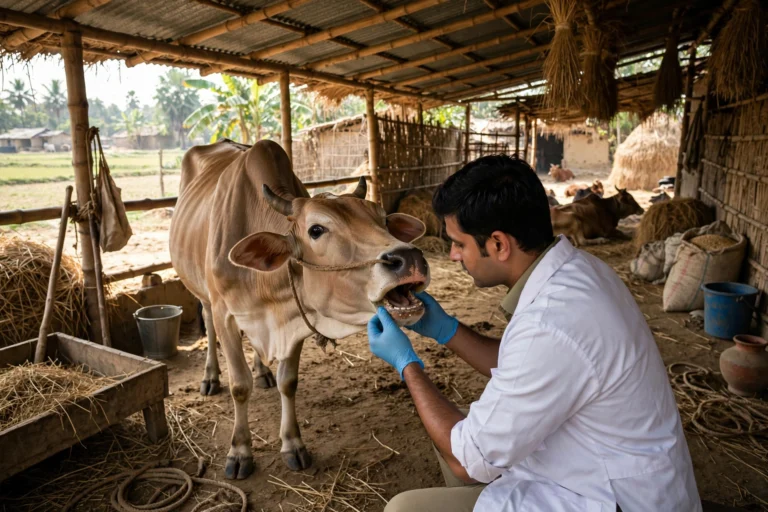
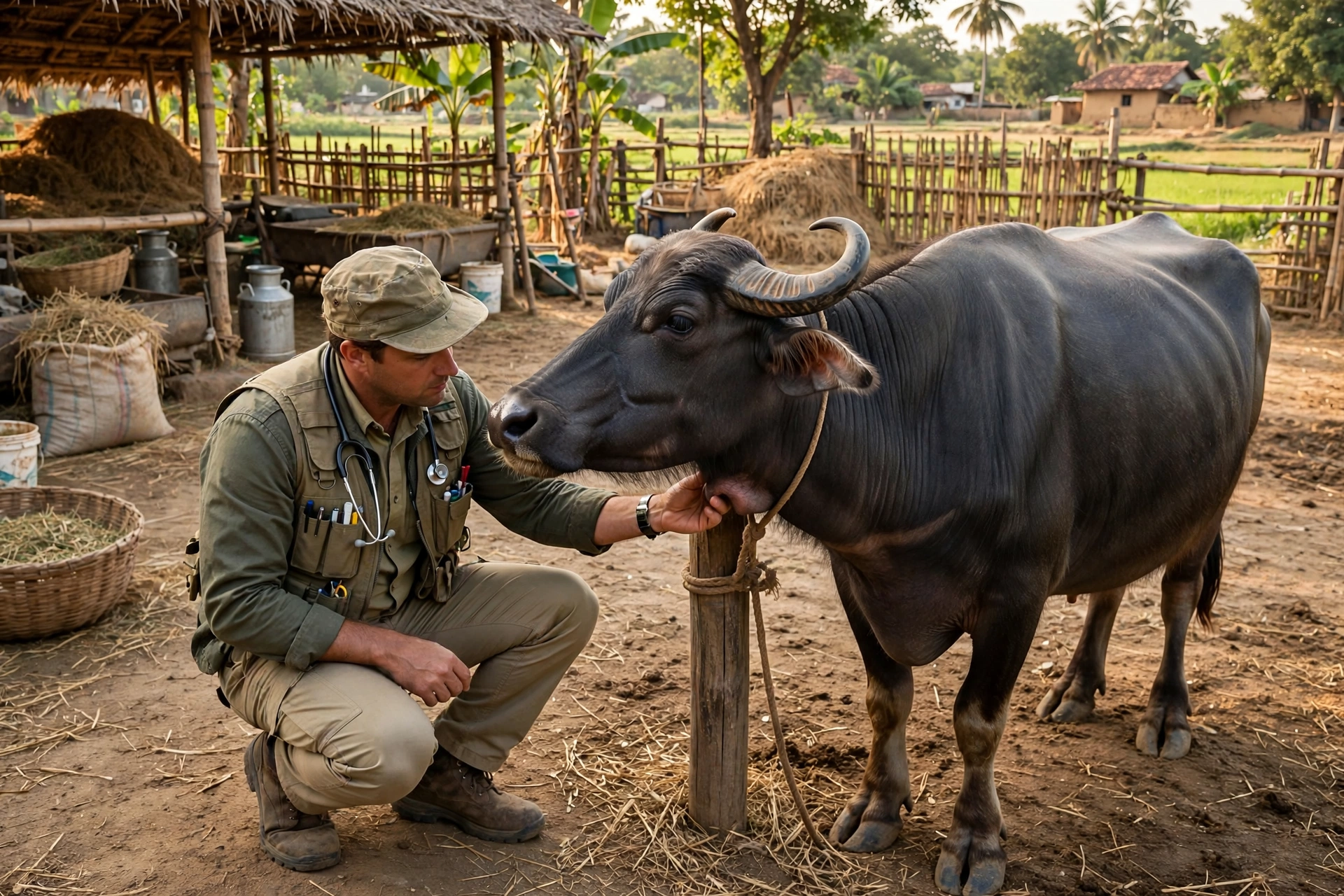
Last monsoon, a farmer from our area called me at 6 in the morning. His best buffalo, the one giving 14 litres a day, had a fever the night before and now its throat was swelling up like a balloon. By the time I reached his farm — barely an hour later — she was lying on her side, gasping, with thick saliva drooling from her mouth. She died before I could even get the needle out of my bag.
That was gal ghotu. Hemorrhagic septicemia. And if you keep buffaloes, this disease should keep you up at night, because once the symptoms are obvious, you are usually already too late.
What Is Hemorrhagic Septicemia?
Hemorrhagic septicemia (HS) is a bacterial disease caused by Pasteurella multocida. It attacks cattle and buffaloes, and it is one of the fastest killers I know in veterinary practice. In Pakistan, it is among the most common causes of sudden death in buffaloes during and just after the rainy season.
The bacteria live quietly in the nose and throat of many healthy animals. They cause no harm as long as the animal is strong and stress-free. But when immunity drops — during monsoon stress, transport, overcrowding, or a sudden change in feed — the bacteria multiply, enter the blood, and trigger massive internal bleeding and organ damage. The name says it all: hemorrhage (bleeding) + septicemia (blood poisoning).
Why Buffaloes Are the Most Vulnerable
Cows can catch HS too, but in my experience, buffaloes die from it far more often. There are real reasons for this:
- Stress sensitivity. Buffaloes handle heat, transport, and sudden weather changes poorly. Their immune system dips faster than a cow’s under the same stress.
- Water wallowing. Buffaloes love standing in ponds and muddy water during the rains — and stagnant water is exactly where the bacteria thrive.
- Late reporting. Most farmers take a buffalo’s one-day fever lightly. “Kal theek ho jayegi,” they say. With HS, you do not have that luxury. I have seen animals die 12 to 24 hours after the first fever.
The peak season is the monsoon and the months right after it. If your area gets heavy rain between July and October, consider that your danger zone.
Early Symptoms You Must Not Ignore
Here is the part that can save your animal’s life. The early signs are not dramatic — that is exactly why they get missed. Call your vet the moment you see the first two or three of these:
- High fever (104–107°F / 40–41.5°C) — sudden and sharp
- Loss of appetite — the animal stops eating and chewing cud
- Dullness and depression — stands apart from the herd, head hanging
- Rapid, difficult breathing — this one is the red flag; it means the throat and chest are filling up
- Swelling of the throat, neck, or brisket — hot, painful to touch, spreads fast
- Thick, stringy saliva or nasal discharge — often blood-tinged in late stages
- Watery, then bloody diarrhoea in some cases
The throat swelling is the classic sign of gal ghotu — farmers in Punjab and Sindh have described it for generations. But do not wait for it. By the time the swelling is big and obvious, the bacteria have already flooded the blood. Early treatment during the fever-and-dullness stage is the difference between life and death.
Treatment: What a Vet Actually Does
I will be honest with you: treatment of HS is a race against time, and even with the best drugs, late cases often do not make it. That is why prevention (below) matters more than this section. But if you catch it early, here is what treatment usually involves:
Antibiotics — Oxytetracycline (long-acting) is the most widely used drug for HS in the field. Sulfonamides and, in some cases, penicillin-streptomycin combinations are also used. The choice depends on the animal’s condition and what your vet has available. Always follow the label dosage — under-dosing is one of the main reasons treatments fail.
Anti-inflammatory and fever medicine — Drugs like flunixin or meloxicam help bring the fever down and reduce the swelling. A hot, swollen throat literally chokes the animal, so controlling inflammation matters.
Supportive care — This is where many farmers go wrong. The animal is not eating, so offer clean drinking water, soft palatable feed, and keep it in a cool, calm place away from stress and other animals. Some vets give fluids in severe cases.
Isolation — Separate the sick animal immediately. HS does not spread as fast as foot-and-mouth disease, but a sick animal sheds bacteria in its secretions, and a stressed herd-mate is an easy next target.
And let me say this clearly: do not waste precious hours on home remedies or waiting to “see how it goes.” Every hour of delay with gal ghotu cuts the survival chance. Call the vet on the first fever, not the third day.
Vaccination: The Real Solution
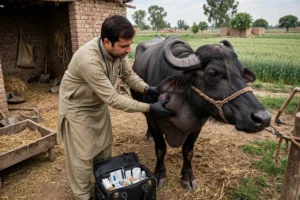
If treatment is a gamble, vaccination is a guarantee — and it costs almost nothing compared to a dead buffalo. The HS vaccine is cheap, widely available at government veterinary hospitals, and highly effective when given on time.
Here is the schedule I recommend to every buffalo owner:
- First dose: 4–6 months of age
- Booster: 2–3 weeks after the first dose (important — the first dose alone does not give full protection)
- Then: once every year, ideally before the monsoon (May–June)
Some practical tips from the field:
- Vaccinate the whole herd, not just the milking animals. Young stock and dry animals carry the disease too.
- Do not vaccinate sick animals or animals under heavy stress. Postpone by a few days.
- Keep a written record — a simple notebook with animal name, date, and vaccine name. I cannot count how many times farmers tell me “I think I vaccinated last year” and I have to start over.
Government veterinary departments in Pakistan run free or low-cost HS vaccination campaigns every year before the rains. Ask your local veterinary officer. There is no excuse for an unvaccinated herd anymore.
Mistakes Farmers Make With Gal Ghotu
Over the years, I have seen the same errors again and again:
- “It is just a fever, she will be fine.” With HS, “just a fever” is the whole disease showing its hand early. Treat it as an emergency.
- Vaccinating after the outbreak starts. The vaccine needs 2–3 weeks to build immunity. Giving it while animals are dying does not save the sick ones — though it does protect the rest, so do it anyway.
- Treating with random injections from the feed store. I have seen farmers give whatever vial was on the shelf, in random doses. Wrong drug, wrong dose, and now the bacteria are drug-resistant too.
- Buying new animals during monsoon without quarantine. New arrivals are stressed from transport — perfect targets for HS. Keep them separate for two weeks and vaccinate if their history is unknown.
- Ignoring dead animals. A carcass left in the open spreads bacteria to the whole area. Bury it deep, away from water sources, or contact the veterinary department.
Frequently Asked Questions
Can gal ghotu spread to humans? HS in buffaloes is not considered a major threat to humans. Pasteurella multocida can occasionally infect people through bites or wounds, but handling a sick buffalo with basic hygiene — gloves, hand washing — is considered safe. The real danger is to your other animals.
My buffalo survived gal ghotu. Is she now immune forever? No. Natural infection gives some immunity, but it fades. Keep her on the annual vaccination schedule like everyone else.
Can I vaccinate a pregnant buffalo? Yes, the HS vaccine is generally considered safe in pregnancy, and protecting a pregnant animal matters even more. That said, mention the pregnancy to your vet — if she is very close to calving or already stressed, the vet may time it accordingly.
Is the government HS vaccine as good as the private one? In my experience, yes — it is the same type of killed vaccine, and government cold chains have improved a lot. The free vaccine you actually give on time beats the expensive one sitting in the shop fridge.
The Bottom Line
Hemorrhagic septicemia is the classic example of a disease where prevention is everything and treatment is often nothing. A buffalo worth lakhs can die in a day; a vaccine worth a few rupees can prevent it. I tell every dairy farmer I meet: mark May on your calendar, get the whole herd vaccinated, and never ignore a sudden high fever during the rains.
The farmer I told you about at the start? He lost that buffalo. But the next May, he brought his entire herd — twelve animals — to the vaccination camp, and he has not lost one to gal ghotu since. Sometimes the hardest lessons teach the simplest truths.
Disclaimer: This article is for educational purposes only and is not a substitute for professional veterinary advice. Always consult your local veterinarian for diagnosis, dosage, and treatment of your animals.