Winter Care for Calves: Protection from Cold and Pneumonia
Ask any experienced dairy farmer which season they dread most, and many will surprise you by saying winter — not because of the cold itself, but because of what it does to calves. Every December and January, my clinic sees the same heartbreaking pattern: calves with pneumonia, calves that stopped growing, and calves that did not make it. Almost all of it was preventable.
Here is the hard truth I share with every farmer: a calf lost in winter is not just an emotional loss. That calf was your future milking buffalo or cow — an asset worth lakhs, three years in the making. Protecting calves through winter is one of the highest-return investments on a dairy farm, and most of it costs very little.
Why Calves Suffer Most in Winter
Adult buffaloes handle our winters reasonably well. Their large body mass generates plenty of heat, and a full winter coat provides insulation. Calves are a different story entirely.
A newborn or young calf has a large surface area relative to its body weight, which means it loses heat fast. Its energy reserves are small — a calf cannot simply “burn fat” through a cold night the way an adult can. And its immune system is still developing, which makes it vulnerable to the respiratory infections that thrive in cold, damp, poorly ventilated housing.
The critical period is the first three months of life, and the danger zone is night-time: temperatures drop, drafts pick up, bedding gets damp, and a calf lying on a cold, wet floor loses body heat all night long. The farmer finds a dull, shivering calf in the morning — or worse, one that will not get up.
Cold does not just threaten survival; it steals growth. A calf spending its feed energy on staying warm is a calf not growing. Winter-born calves that are poorly protected can lag weeks behind in growth, and that delay echoes all the way to their first calving — a stunted heifer calves late and milks less. Winter care is really about protecting the animal’s entire future.
Pneumonia: The Winter Killer
If winter has one signature calf disease, it is pneumonia — and it kills more calves in our region than any other single winter cause. It thrives in exactly the conditions many calf sheds provide: cold air, drafts, damp bedding, and overcrowding.
Early Warning Signs
Pneumonia rarely strikes without warning. Watch for:
- A dry, hacking cough — often the very first sign, easy to miss if you are not listening.
- Nasal discharge that starts clear and turns thick or yellowish.
- Rapid or laboured breathing, flared nostrils, the calf breathing with its mouth open.
- Fever — a calf’s normal temperature is around 38.5–39.5°C. Above 40°C with respiratory signs means act now.
- Dullness and loss of appetite. A calf that does not rush to its milk is a calf telling you something is wrong.
- Ears drooping, head hanging low, reluctance to move.
The golden rule: treat early. A calf treated at the first cough usually recovers in days. A calf treated after three days of laboured breathing may take weeks — if it survives. I tell farmers to keep a thermometer in the calf shed and check any calf that looks “off.” A thermometer costs a few hundred rupees and has saved more calves than any medicine I prescribe.
What To Do When You Spot It
Isolate the sick calf from healthy ones immediately — pneumonia spreads through the air in close quarters. Keep it warm, dry, and out of drafts. Then call your veterinarian. Pneumonia usually needs proper antibiotics, and the choice and dose matter; this is not a condition for guesswork or leftover medicines. Supportive care — warmth, easy-to-drink milk or electrolytes, clean water — matters as much as the medicine.
Never wait “to see if it gets better on its own.” With calf pneumonia, waiting is the most expensive decision you can make.
Bedding: The Foundation of Winter Protection
If I could give calf raisers only one winter instruction, it would be this: keep the bedding deep, dry, and draft-free.
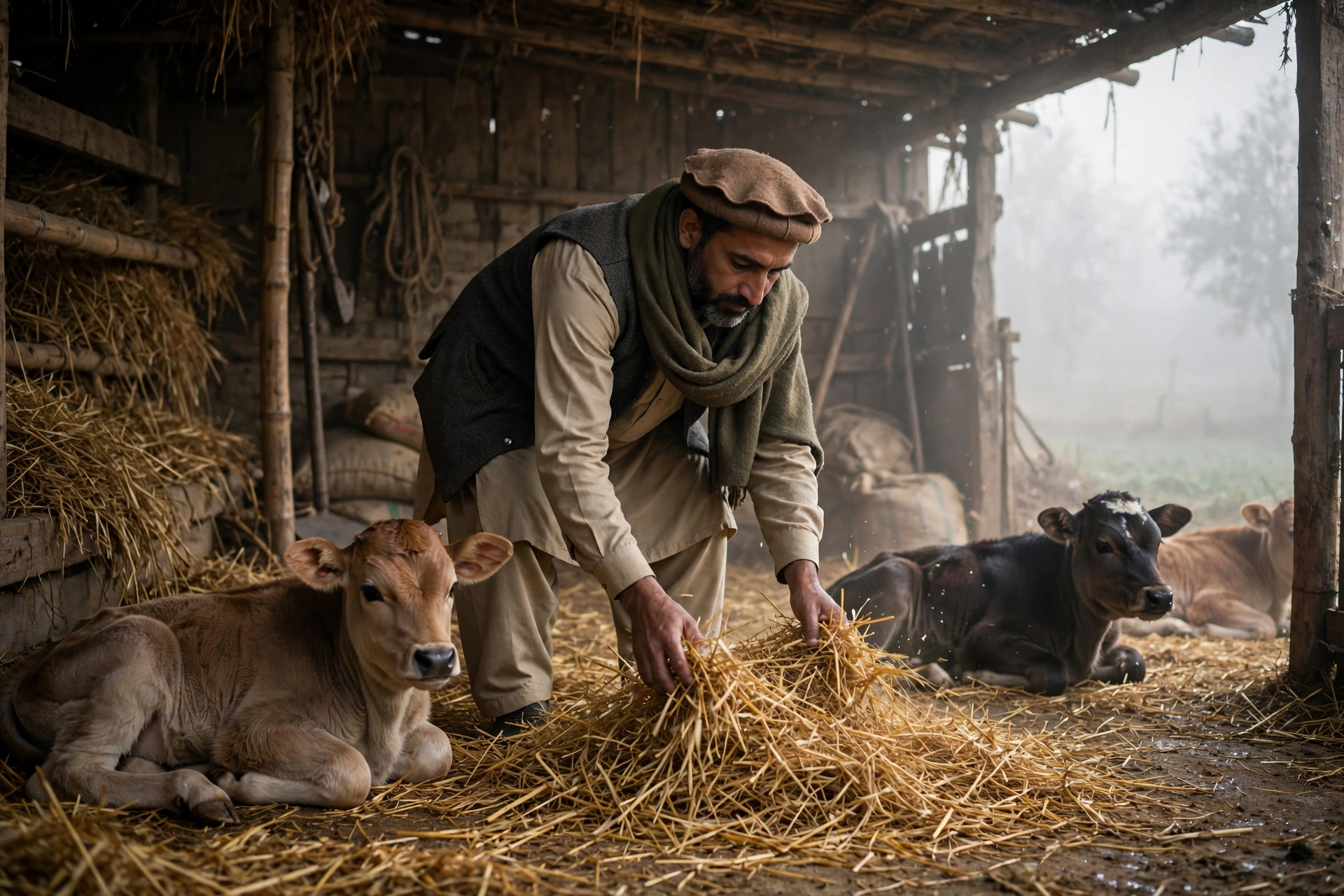
A calf loses enormous heat through contact with a cold floor. The fix is simple — bedding thick enough that the calf nests into it:
- Wheat straw (toori/bhoosa) is the standard and works well. Layer it 4–6 inches deep so the calf’s legs disappear into it when lying down — that “nesting” is the sign the bedding is deep enough.
- Change or top up bedding daily. Damp bedding is worse than thin bedding — wet straw draws heat out of the calf’s body and breeds the bacteria that cause pneumonia and navel infections.
- In the coldest weeks, some farmers add a layer of dry sand under the straw for insulation from the cold floor. It works, as long as the straw on top stays dry.
Do the knee test: kneel in the calf pen for 30 seconds. If your knees get cold and damp, the bedding is failing your calves. It is a crude test, but I have never seen it lie.
Draft Protection Without Suffocation
Here is where many farmers get it wrong in both directions. Some leave calf pens fully open to icy night winds. Others seal calves into airless boxes “to keep them warm” — and the ammonia and moisture build-up in a sealed pen is a pneumonia factory.
What calves need is still air without drafts: protection from wind at the calf’s lying level, with ventilation above. Practical approach:
- Block drafts at ground level — stack straw bales, hang gunny sacks or tarpaulin on the windward side of the pen, down to the floor.
- Leave ventilation open above the calves’ heads. Warm, moist air rises; it needs somewhere to go.
- Never seal a calf pen completely. If you can smell ammonia when you enter, the ventilation is inadequate, and every calf in there is breathing irritant air that damages their lungs’ defences.
Calves in a draft-free but ventilated pen, on deep dry bedding, handle our winter nights far better than most farmers expect.
Calf Jackets and Blankets
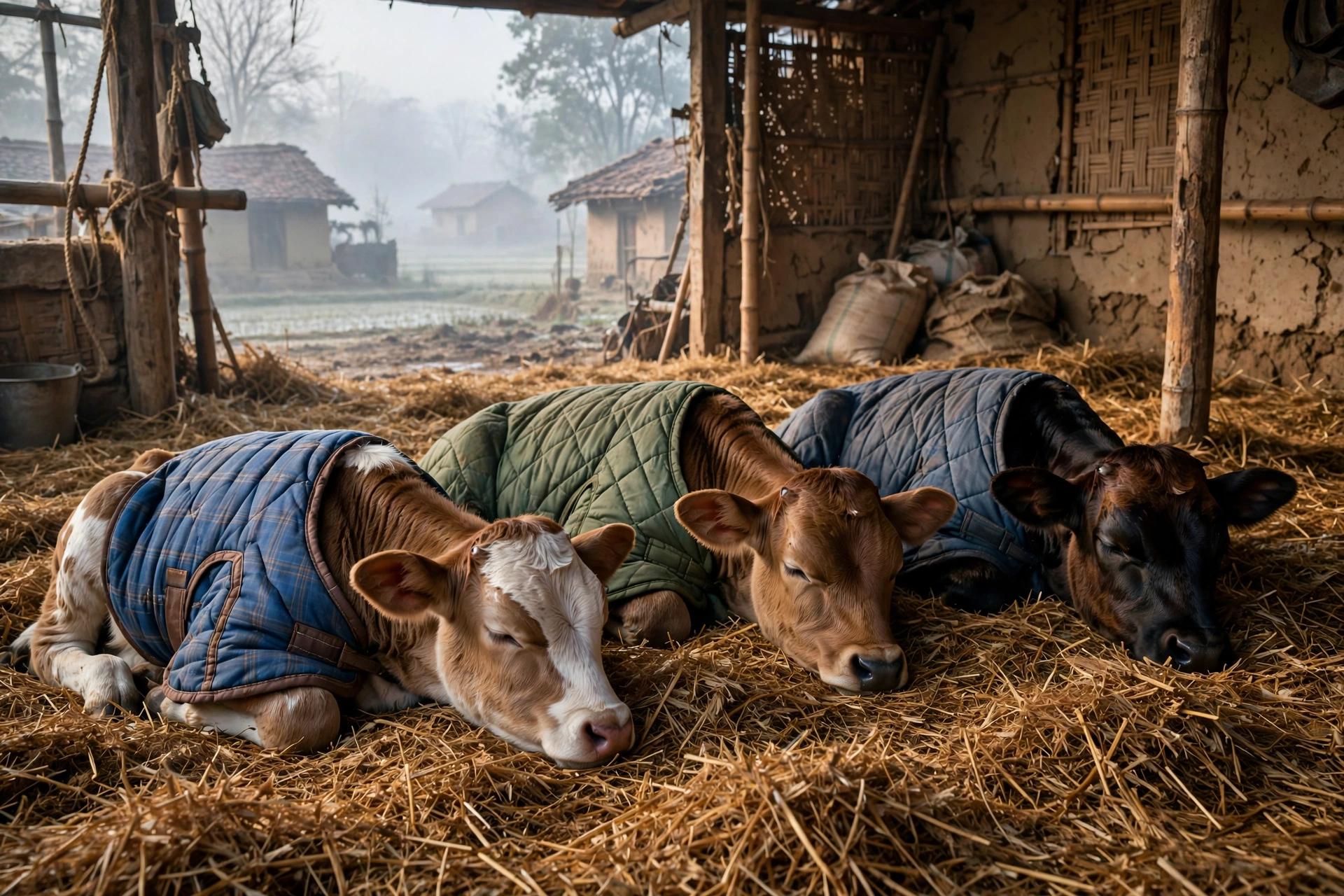
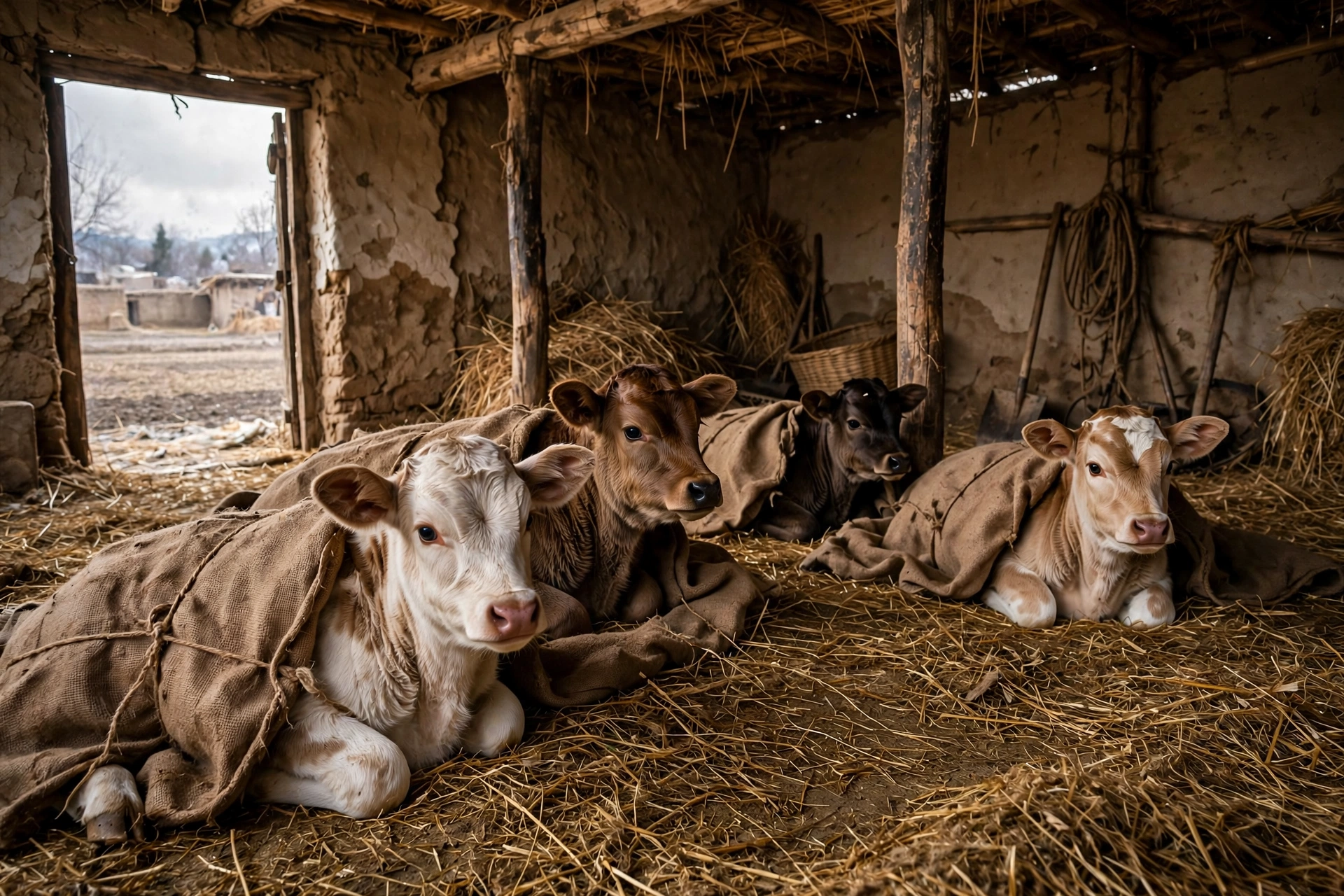
Calf jackets — simple insulated covers — are one of the most cost-effective winter tools available, and they are finally becoming common in our region. A good calf jacket costs roughly PKR 800–1,500 and lasts multiple seasons.
Use jackets for:
- Newborn calves in their first 2–3 weeks, especially those born in December–January.
- Any calf that is sick, thin, or shivering.
- Night-time during cold waves, even for older calves.
Keep jackets clean and dry — a wet, filthy jacket is worse than none. Have two per calf if possible so one can dry while the other is worn. In a pinch, a clean jute sack with leg holes, changed when damp, does the job. Farmers laugh when I suggest it, then call back to say it worked.
Feeding Extra Energy in Cold Weather
This is the part most farmers miss. A calf in cold weather burns significantly more energy just staying warm — and if you feed the same milk quantity as in summer, the calf quietly starves while appearing fed.
Practical adjustments for winter:
- Increase milk or milk replacer by 10–20% during cold spells for young calves. That extra energy goes to warmth, protecting growth.
- Feed milk warm (around body temperature, 38–39°C), not cold. Cold milk in a cold calf is a double burden — the calf spends energy warming the milk inside its body.
- Offer calf starter (concentrate) from the second week of life, fresh daily. Calves that nibble starter early develop their rumen faster and handle winter better.
- Provide warm water — calves drink more water when it is not ice-cold, and water intake drives starter intake, which drives growth. Lukewarm water twice daily in winter makes a measurable difference.
- Never reduce feeding because “the calf looks fine.” Growth lost in winter is very hard to recover later.
Warm Water and Hygiene
Winter is not the season to relax hygiene — it is the season hygiene matters most. Damp, dirty conditions plus cold equal disease.
- Wash milk feeding utensils with hot water after every feeding. Milk residue in cold weather still breeds bacteria.
- Keep the calf area dry above all else. Fix leaking roofs before winter, not during it. A single drip over a calf pen through January will undo all your other efforts.
- Disinfect pens between calves. A pen that housed a pneumonia case should be cleaned, dried, and ideally left empty and sun-exposed for a few days before the next calf.
Vaccination Timing Before Winter
Vaccines need weeks to build protection, so winter vaccination done in winter is already late. Plan on this schedule:
- HS (hemorrhagic septicemia) and FMD vaccines for calves at the recommended ages — discuss the exact schedule with your vet, as it depends on the calf’s age and local disease pattern. The key point: the autumn round of vaccinations should be complete before the cold sets in.
- Deworming in late autumn. Internal parasites steal the nutrition a calf needs for winter; a dewormed calf enters winter stronger.
- Keep a simple health card per calf: birth date, colostrum given (yes/no), vaccinations with dates, deworming dates, any illness. When a calf falls sick in January, that card tells your vet exactly what protection the calf has.
And colostrum — the first milk — deserves one more mention. A calf that received adequate colostrum in its first 6 hours of life has antibodies that protect it for weeks. A calf that missed colostrum enters winter with no defences. No jacket or bedding fully compensates for missed colostrum. It is the single most important “vaccination” a calf ever gets, and it is free.
The Night Check Routine
Finally, the habit that saves the most calves: a quick night check. It takes five minutes. Walk to the calf pen after dinner, check that bedding is dry, calves are lying comfortably (not huddled and shivering in a corner), jackets are on and dry, and there is no draft ripping through. In my experience, the farmers who do this lose very few calves. The ones who “check in the morning” find problems that started at midnight.
Frequently Asked Questions
At what temperature do calves start suffering? Young calves (under 3 weeks) begin spending extra energy on warmth below about 10–15°C, especially at night with wind and dampness. It is not just the thermometer — wind and wet conditions make moderate cold dangerous.
Can I use a heater or angeethi in the calf shed? Open flames and coal burners in an animal shed are a fire and carbon monoxide risk — I strongly advise against them. Deep bedding, draft protection, and jackets are safer and effective. If you must add heat, only use properly installed, guarded electric heating designed for animal housing, and never leave it unattended.
Should calves be kept with adult animals in winter for warmth? No. Adult animals carry respiratory germs harmless to them but dangerous to calves, and the air quality around adults is worse. House calves separately in their own clean, draft-free space — always.
My calf is shivering — is that an emergency? Shivering means the calf is losing the battle against cold. Dry it, add bedding, put on a jacket, offer warm milk, and block drafts. If shivering continues after warming measures, or the calf becomes dull and stops suckling, call your vet — it may be developing pneumonia or hypothermia.
Final Word
Winter calf care is not complicated and not expensive. Deep dry bedding, no drafts, a jacket, a little extra warm milk, vaccines done on time, and a five-minute night check. That is the whole formula. Yet every winter I treat calves whose suffering came down to a wet floor or a missed vaccine — small neglects with large consequences. Your calves are your farm’s future, three years away. A little attention now, on cold nights, is what turns them into the milking animals your farm will depend on.
Disclaimer: This article is for educational purposes only and reflects general field experience. Calf pneumonia and hypothermia can be life-threatening — always consult your local veterinarian promptly for sick calves, and follow their guidance on medicines and dosages.