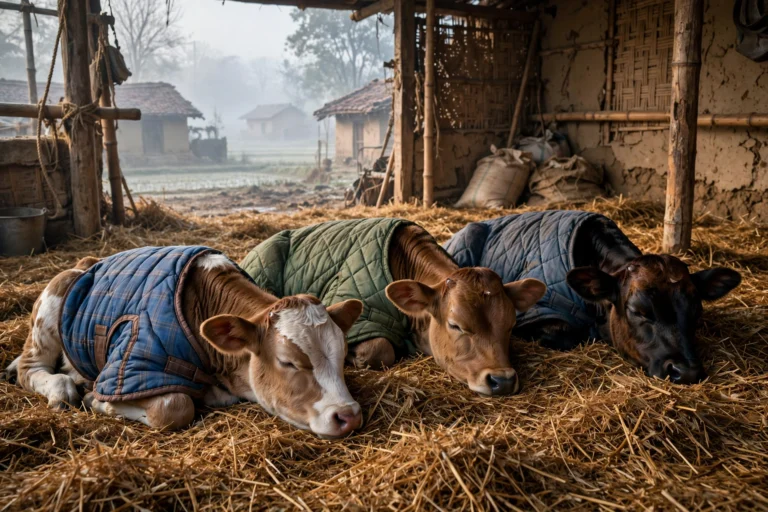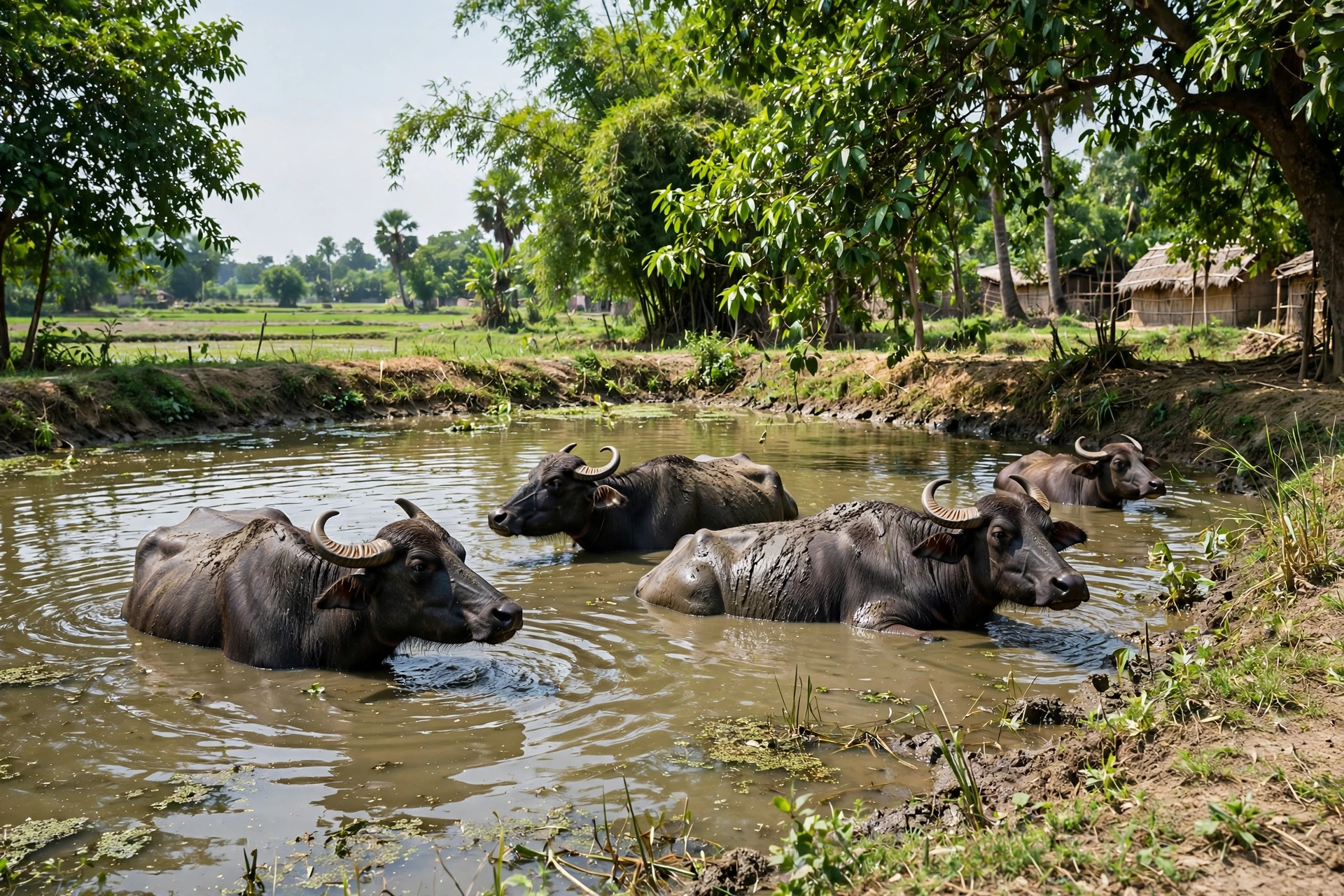
Heat Stress in Dairy Animals: Signs, Cooling Methods and Prevention
Every year, as May approaches, I start getting the same phone calls. “Doctor sahab, the buffalo’s milk has dropped.” “She is eating half her feed.” “She was in heat last month, now nothing.” Nine times out of ten, when I visit the farm, the diagnosis is standing right there in front of me: an animal baking in the heat, panting, with no shade, no fan, and warm water in the trough.
Heat stress is the most underestimated profit-thief in dairy farming. It does not arrive like a disease, with dramatic symptoms. It creeps in slowly — a litre less here, a missed heat there — and by the end of summer, a farmer can lose 15–25% of expected milk production without ever identifying the cause. Let me explain how to spot it early and what actually works against it.
How Heat Stress Silently Cuts Milk Yield
Here is what happens inside the animal. When the temperature-humidity combination rises beyond the comfort zone, the buffalo or cow must spend energy cooling herself — panting, increasing blood flow to the skin, sweating. That energy comes from the same pool that produces milk. Milk yield is always the first thing sacrificed, because the body prioritises survival over production.
But the damage goes deeper than milk. Feed intake drops — sometimes by 20–30% in peak summer — because digestion itself generates body heat, and the animal instinctively eats less to stay cooler. Less feed in means less milk out, and the animal also loses body condition, which hurts the next lactation and fertility.
Then there is reproduction. Heat-stressed animals show weaker, shorter heat signs. Conception rates fall. I have seen farms where summer breedings simply do not take, and the farmer only discovers the problem months later when animals turn out not to be pregnant. A missed pregnancy costs you months of future milk.
The cruel part: most of this is invisible day to day. A litre lost here and there does not trigger alarm. But add it across ten animals over four months, and you have lost thousands of litres.
Recognising the Signs Early
Learn to read your animals in summer. The early signs of heat stress are:
- Panting or rapid breathing. A resting buffalo breathing faster than 40–50 breaths per minute in the shade is telling you she is hot. Count it — put your hand near her nostril or watch her flank for 30 seconds and double it.
- Reduced feed intake. Feed left uneaten in the manger, especially the midday feed, is one of the earliest signs.
- Standing instead of lying down. Animals stand to expose more body surface to the air. A shed full of standing animals at noon is a shed that is too hot.
- Drop in milk. A gradual decline of 1–2 litres per day per animal as summer peaks, without any illness.
- Excessive drooling and restlessness, crowding around water troughs, reluctance to go out to graze in the afternoon.
- Hot, dry skin and in severe cases, open-mouth breathing — that is an emergency, not a warning.
The single most useful habit: check breathing rates on the hottest afternoons. It takes two minutes and tells you more than any thermometer.
Shade: The First and Cheapest Defence
Before fans, before sprinklers, before anything fancy — shade. An animal standing in direct sun at 2 PM absorbs an enormous heat load that no amount of water can fully offset.
Every animal should have access to shade during 11 AM to 4 PM. Natural tree shade is the best — it is cooler than any roof because leaves transpire and cool the air. If you are planning a farm, plant fast-growing trees (like sufaida/eucalyptus or shisham) on the west and south sides of the paddock now; in three years you will have real shade.
For immediate shade, shade nets (50–75% shade factor) stretched over paddocks work well and cost little. In the shed, the high roof and open sides I described in my shed design article do the job. The principle is simple: no animal should be forced to stand in direct midday sun.
Water: More Important Than You Think
In summer, water is feed. An adult buffalo needs 60–80 litres a day in hot weather, sometimes crossing 100 litres in extreme heat. A milking animal producing 12 litres of milk is literally exporting water in every litre — she must drink it back.
Three rules I insist on:
- Water must be cool and clean. Troughs in direct sun become warm soup that animals refuse. Keep troughs shaded and refill with fresh water at least twice daily.
- Never let troughs run dry. Check at noon and again in the evening. In my practice, “the trough was empty by afternoon” is behind a shocking number of summer milk drops.
- Two troughs minimum for ten animals. Dominant animals guard a single water source. The timid ones — often your best milkers — drink less.
Sprinkling Schedule That Actually Works
Water on the skin cools through evaporation, and buffaloes respond to it beautifully. But random splashing is not a system. Here is a schedule that works:
- Late morning (10–11 AM): First sprinkling, as the heat builds.
- Early afternoon (1–2 PM): Second sprinkling, the hottest part of the day.
- Late afternoon (4–5 PM): Third sprinkling as animals recover.
Each session: wet the animal thoroughly — neck, back, flanks — then let her stand in moving air (fan or breeze) to dry. Wet-and-dry cycles cool far better than keeping an animal constantly damp in still air. A simple overhead sprinkler line on a timer does this automatically; a hose and 15 minutes of labour does it manually.
One caution: never throw cold water on a severely heat-stressed, panting animal all at once — cool her gradually, offer water to drink first, and call your vet if she does not improve. Sudden cold shock on an overheated animal can do harm.
Fans and Air Movement
Moving air is what makes every other cooling method work. A wet animal in still air stays hot and humid; the same animal in a breeze cools quickly.
In the shed, run fans from late morning through the evening in summer. Position them to blow across the animals’ bodies, not just stir the air near the roof. For open paddocks, even the natural breeze helps — which is another reason not to wall in your paddock with solid barriers.
If you can afford only one cooling investment, make it fans. They run for years, cost little in electricity, and protect milk every single day of summer.
Buffalo Wallowing Ponds
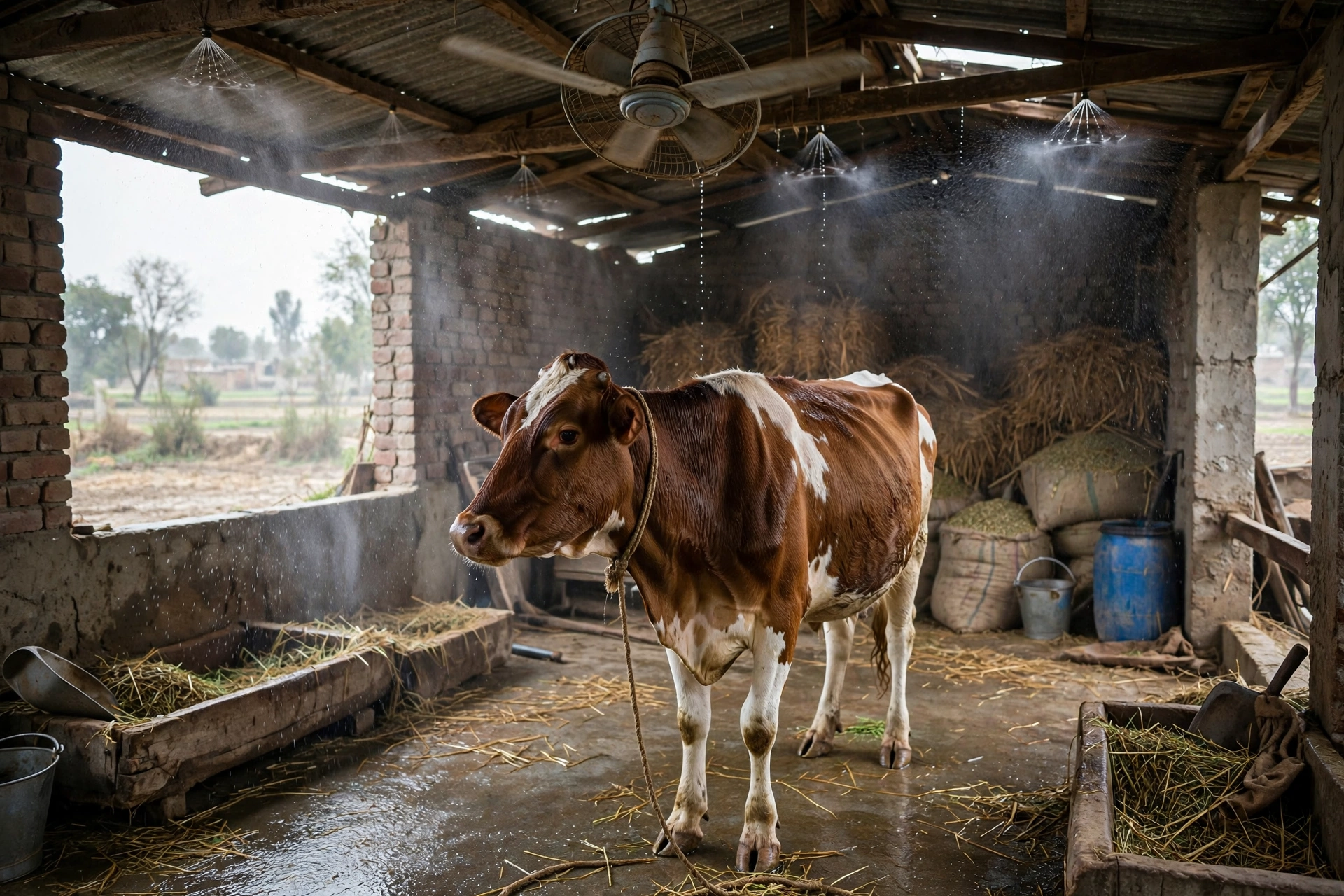
This is the buffalo’s natural cooling system, and wise farmers use it. A wallow — even a simple 3–4 foot deep pond in or near the paddock — lets buffaloes do what they evolved to do. Animals with wallow access consistently hold their summer milk better than those without.
Practical points: the pond does not need to be fancy, but the water should be changed or refreshed regularly. A stagnant, filthy wallow becomes a source of skin infections, foot rot, and parasites. Some farmers drain and refill weekly in summer. Also, let animals wallow in the heat of the day and come out to feed in the cooler hours — do not let wallowing replace feeding time.
Timing of Feeding and Watering
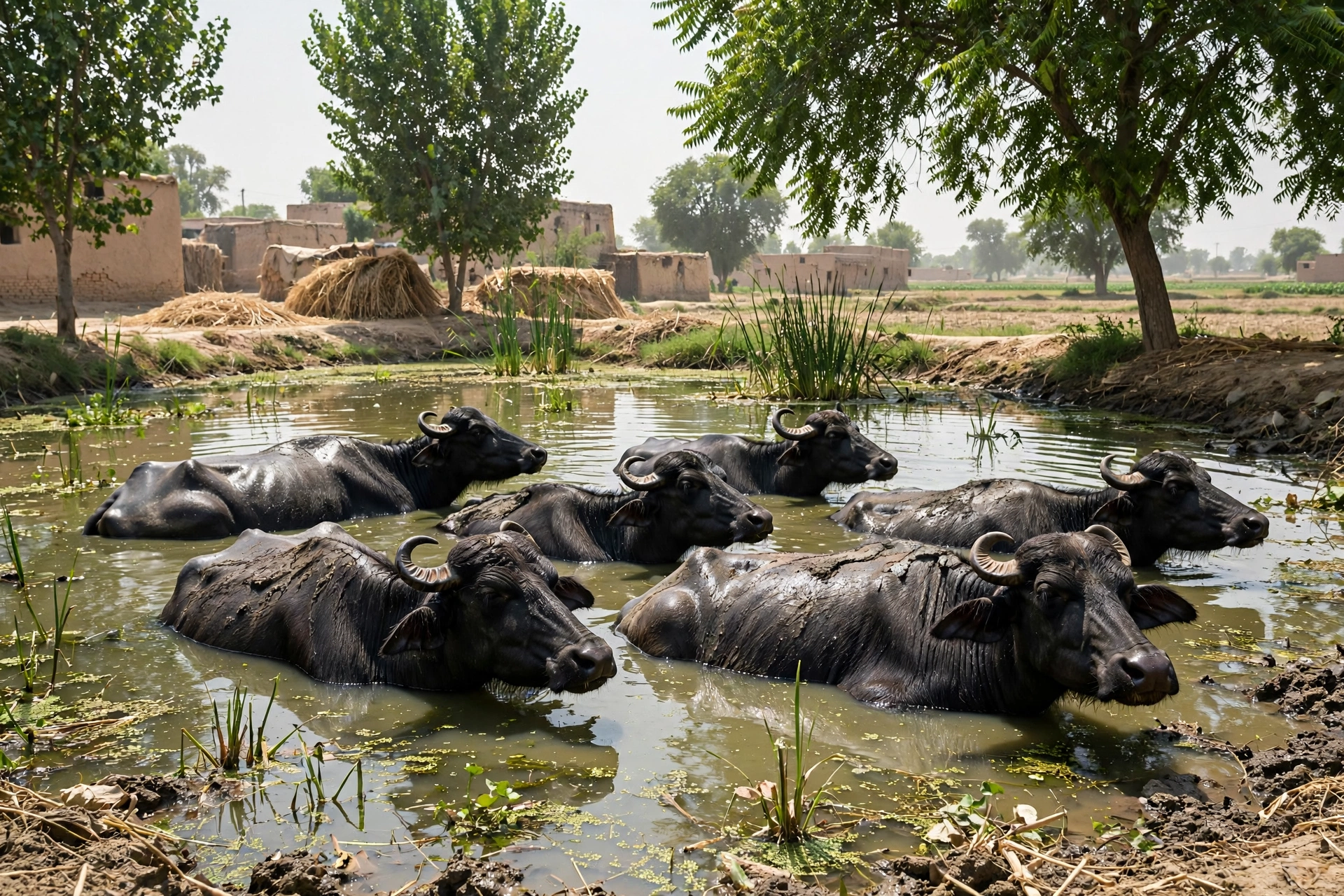
In summer, when you feed matters almost as much as what you feed. Digestion produces heat, so a big midday meal lands right when the animal is already hottest.
Shift the feeding schedule:
- Main concentrate feeding: early morning (5–6 AM) and late evening (7–8 PM), when it is cool.
- Green fodder: offer generously in the evening; animals will eat more at night in summer.
- Midday: keep it light — some dry fodder or a small feed, but do not expect much intake.
Many experienced farmers also do a late-night feeding round in peak summer. It sounds like extra work, but the animals eat willingly at 10 PM, and that feed becomes morning milk.
Summer Feeding Adjustments
Since total intake drops in heat, every bite must count more:
- Increase energy density. When an animal eats 20% less, the feed she does eat should carry more energy. Slightly increase concentrate proportion (under your vet’s guidance — too fast a change causes acidosis).
- Good mineral mixture is non-negotiable in summer. Heat increases mineral loss through sweating and panting. 50–80 grams of quality mineral mixture daily per animal supports intake, milk, and fertility.
- Fresh, palatable fodder. Wilted, sun-baked fodder gets refused. Cut green fodder fresh, feed it promptly, and remove leftovers before they spoil in the heat — spoiled feed in a summer manger is a fast track to digestive trouble.
- Salt: keep common salt available. Sweating depletes sodium, and salt encourages water intake, which is exactly what you want.
Avoid sudden feed changes in summer. The rumen is already stressed by heat; a sudden switch of concentrate or fodder can tip an animal into acidosis or bloat. Change gradually over 7–10 days, always.
Protecting Breeding in Summer
Because heat stress wrecks fertility, summer breeding needs extra attention:
- Watch for heat signs in the early morning and late evening, when animals are cooler and signs are clearer. Midday heat-checking in summer misses most heats.
- Do not skip insemination or mating just because it is hot — a missed cycle now means a delayed calving later, which means months of lost future milk.
- Ensure the animal is well-hydrated and cooled before and after AI; a heat-stressed uterus is a hostile place for conception.
- Keep accurate breeding records so you can pregnancy-check on time instead of discovering failures months late.
Frequently Asked Questions
How much milk can heat stress actually cost me? In unmanaged farms, 15–25% of summer production is a realistic estimate — for a buffalo giving 12 litres, that is 2–3 litres a day lost for months. Across ten animals over a four-month summer, that is thousands of litres and lakhs of rupees.
Are cows or buffaloes more affected by heat? Buffaloes feel it more due to their dark skin and fewer sweat glands, which is exactly why wallowing and sprinkling help them so much. But high-yielding crossbred cows suffer badly too — higher production means higher metabolic heat.
Can I use air coolers (desert coolers) in the shed? They help in dry heat (May–June) but add humidity, which makes things worse in the monsoon months. Fans plus sprinkling is more reliable across the whole summer. If you use coolers, use them only in dry months and keep air flowing.
What is the emergency response for a severely heat-stressed animal? Move her to shade immediately, offer cool (not ice-cold) water to drink, sprinkle water gradually starting from the legs and neck, keep air moving with a fan, and call your veterinarian. Open-mouth breathing, staggering, or collapse needs professional help fast — do not wait to see if she improves on her own.
Final Word
Heat stress is not bad luck; it is unmanaged physics. The sun, the air, and the animal’s body follow rules, and once you understand them, the solutions are straightforward: shade, water, air movement, smart feeding times. None of it requires expensive technology. What it requires is routine — the daily discipline of sprinkling at noon, checking water at 2 PM, feeding at dawn. The farmers whose milk holds steady through June are rarely the ones with the fanciest sheds. They are the ones who never skip the routine.
Disclaimer: This article is for educational purposes only and reflects general field experience. Severe heat stress can be life-threatening — always consult your local veterinarian promptly for animals showing serious symptoms.